Showing posts with label masks. Show all posts

Saturday, August 9, 2025

Wildfire smoke is like smoking half a pack a day. Here's how to protect yourself


Smoke from Canadian wildfires continued to prompt air quality alerts Monday in the Northeast U.S. as well as the Upper Midwest. Michigan saw a statewide air quality advisory on Monday, and while Minnesota is seeing some relief, the wildfire smoke is persisting in Wisconsin and spreading across New York, Vermont and Maine.

Canada is experiencing its second-worst wildfire season on record, according to government data. There have been nearly 4,000 fires recorded already this calendar year. Exposure to wildfire smoke is a growing health problem across the country, as human-caused climate change increases the risk and intensity of wildfires and the smoke that can drift thousands of miles downwind from them.

Here's what you need to know about the health risks — and how to protect yourself.

The health risks of breathing wildfire smoke

May-Lin Wilgus, a pulmonologist and professor at UCLA, compares breathing wildfire smoke to smoking cigarettes — a lot of cigarettes. Scientists track air quality with the air quality index, or AQI, which incorporates different pollution sources like ozone and fine particulates. Many scientists don't think there's a "safe" AQI level because the measurement doesn't capture many harmful pollutants, but under 50 is often considered acceptable. Higher numbers indicate more health-damaging pollution in the air.

 Monday, August 4, the AQI in Detroit was at least 159. On a smoky day, when AQI levels reach 100 to 200, "the exposure to the fine particulate matter, the air pollution, is similar to smoking a quarter to half a pack a day," Wilgus says.

That exposure takes a toll on a healthy person. But it is particularly harmful for those with preexisting health issues, Wilgus adds. Emergency room visits for respiratory issues like asthma and COPD increase dramatically during wildfire smoke events, as much as doubling in some cases. During the Canadian wildfires in 2023, when smoke wafted across much of the U.S., emergency room visits for asthma increased by nearly 20%.

Smoke exposure can also worsen other medical conditions. Emergency departments see more cardiovascular related visits after smoky days. And a growing body of research suggests smoke exposure is linked to long-term impacts such as a higher risk of developing dementia.

Overall, air quality has improved in the U.S. over the past 20 years, says Tarik Benmarhnia, a climate and health scientist at the Scripps Institution of Oceanography at the University of California, San Diego. But wildfire smoke is erasing many of those gains.

"Just maybe like 10 years ago, wildfire was an exceptional issue. It was something that happens once in a lifetime for most people," he says. But climate change has increased the chance of wildfires across many parts of the country and the intensity of many of the burns themselves and the smoke they produce. "This is unfortunately not the first one and not the last one the people in Los Angeles are going to be experiencing," Benmarhnia says.

Life Kit explains.

The dangers of breathing wildfire smoke 

Wildfires burn at extremely high temperatures, which makes their ash more toxic than other pollution, such as car exhaust. But in many cases, including during these ongoing fires, it's not just trees and organic matter that burn. Homes, cars and other materials go up in flames, too, adding potentially harmful particles to the pollution load.

"It's just a toxic soup," says Lisa Miller, a wildfire smoke expert at the University of California, Davis. "Think of all the synthetic fibers that are present in your living room — in your couch, in your carpet, in your clothes. All those things can be particularly toxic" if they go up in smoke, she says.

Higher risks for some people

Wildfire smoke is hazardous for everyone, but it's especially dangerous for some people, including children and older adults, pregnant people and anyone with preexisting health problems.

First responders and firefighters are exposed to the worst of the smoke. A 2019 study found that heavy, repeated smoke exposure among wildland firefighters is linked with higher risks of lung cancer and cardiovascular disease. Children can be especially vulnerable, doctors say, because they breathe in more air — and therefore more smoke — relative to their body size.

Pregnant people should also take care, says Miller. There's growing evidence that wildfire smoke exposure is linked with higher chances of preterm birth and lower birth weights, an outcome sometimes linked with health issues later in life. Older people and those with preexisting health problems like heart issues are also at higher risk. The Shots Blog breaks down advice for how to protect people who are more at risk from wildfire smoke.

How to protect yourself from wildfire smoke 

"If you can smell smoke, those are times to limit your exposure as much as possible," says Wilgus. She says the best way to protect yourself is to leave the area and get outside the range of the wildfire smoke, if possible.

If that's not an option, she suggests staying indoors with the windows tightly shut. Limit your physical activity. Run an air filter if you have one. If you have to go outside, consider wearing an N95 mask, which effectively blocks most tiny particles from getting into your lungs if worn correctly.

No level of exposure to wildfire smoke is completely safe, says Miller. But toxicologists have a saying, she says: "The dose makes the poison. It's about how much, and how long, you're exposed." That means everything you can do to limit the dose, she says, helps protect you.

Editor's note: This story has been updated to reflect the current wildfire smoke conditions in the U.S. The original story was published Jan. 8, 2025.

For more tips, check out Life Kit's guide.

NPR, by Alejandra Borunda & Julia Simon


Saturday, January 15, 2022

Can You Reuse a N95 or KN95 Mask? Experts Say Yes, but Follow These Steps (Smithsonian Magazine)


When putting on or taking off a mask, handle it by the edges or straps to avoid contamination. With the highly contagious omicron variant of Covid-19 raging across the country, public health experts are encouraging Americans to upgrade their masks from cloth face coverings to an N95 or KN95 mask.

But these face masks can only be reused for a short period of time, leaving many wondering if and how they can safely reuse their N95 or KN95 face mask. Here are tips from experts on getting the most out of your KN95 or N95 mask:

Use Good Form

When putting on a new mask, check for a snug fit around the mouth, nose, and chin. Most N95 or KN95 masks are made of a fabric-like web of synthetic polymer fibers designed to ensnare virus particles. The main difference between the two masks is that N95 masks are the standard in the United States, while KN95s are the standard in China. N95s are also approved for use in medical settings in the U.S.

Once your mask is on, avoid touching your mask as much as possible. One common error is pulling down a mask to talk to others, which creates multiple opportunities for contamination. When taking your mask off, keep away from the front and inside of the mask. Instead, handle it by the edges or straps. After removing your mask, thoroughly wash or sanitize your hands.

"Definitely avoid the part right in front of where you breathe, like right in front of your nose and mouth," says Linsey Marr, a professor of civil and environmental engineering at Virginia Tech, to Kristen Rogers for CNN. 

Take a Sanitation Break

Unlike the cloth masks recommended earlier in the pandemic, N95 or KN95 masks can’t simply be tossed in the laundry. Because the masks have a special static charge that traps viruses, they should never be washed.

Virus particles trapped in the respirator will die off over the course of hours to days, so experts recommend letting an N95 or KN95 mask hang out in a cool, dry place for a day or two between outings.

A simple method for implementing this resting period between uses is to put your mask in a brown paper bag for 24 to 48 hours before using it again.

“The concern about wearing a mask in public, obviously, if you get particles on it, perhaps even the virus, but if you store it in a dry bag, you are essentially sanitizing again over a period of time,” says Joe Gastaldo, an infectious disease expert at OhioHealth, to the Miami Herald’s Bailey Aldridge.

Sabrina Assoumou, an infectious disease physician at Boston Medical Center, recommends having multiple masks in a rotation, so each mask can have a sanitation break between uses. Individuals can then label the bags accordingly to keep track of each mask.

"For an N95, we'd recommend you switch [the mask] every day," says Assoumou to Felicity Warner for USA Today. "But, you can rotate them. If you have three masks, [for example], you could number them and switch them around."

Check for Wear and Tear

Because masks deteriorate at different rates, it’s a good idea to regularly check a mask’s fit and function before you use it. Look for signs of stretched-out straps, stains, soiling, or fraying of the mask—all of which compromise its ability to filter out Covid-19.

The longer and more frequently you wear an N95 mask, the more contaminated it can become, and the sooner it will need to be replaced. A front-line worker wearing an N95 mask for a day-long shift may find their mask is compromised after one use, while someone dining with a mask or wearing one for a trip to the grocery store may find they can get multiple uses out of it.

"If you're rotating your masks, washing your hands and storing them well, you can get five to a little bit more uses with them," Gastaldo says to USA Today.

The Centers for Disease Control and Prevention (CDC) recommends using N95 respirators for no more than five uses, noting that each time an N95 is removed and put back on, it weakens and stretches the masks’ straps. Per CDC guidance, health care workers should not reuse respirators.

“Really, it's going to get gross from your face or the straps will get too loose or maybe break before you're going to lose filtration ability," Marr says to CNN.

Known When It Has to Go

Both N95 and KN95 masks can’t be reused forever, so you’ll have to know when it’s time to toss it. There is no hard-and-fast deadline—the masks’ effectiveness declines over time—but experts say if the mask is visibly dirty or damaged, stained, or gets damp, it’s time to let it go.

Any time someone comes in close contact with an individual infected with Covid-19, they should opt for a new N95 or KN95 face mask.

 -Corryn Wetzel, Smithsonian Magazine


Friday, January 14, 2022

Proper Fit and Use of N-95 Masks


Proper N95 Respirator Use for Respiratory Protection Preparedness

Posted on by Maryann M. D’Alessandro, PhD, and Jaclyn Krah Cichowicz, MA

When outbreaks of infectious disease occur, we rely on healthcare professionals to care for those affected, putting themselves at increased risk of exposure to the pathogen causing the disease. While engineering and administrative controls should be the first considerations to protect these workers from this exposure, facilities should also ensure that at-risk employees are prepared to use respiratory protection, among other personal protective equipment, should the need arise.

To aid healthcare facilities experiencing shortages of N95 respirators due to high demand across the nation, CDC developed the Strategies for Optimizing the Supply of N95 Respirators in Healthcare Settings which provides options on how to optimize supplies of disposable N95 filtering facepiece respirators (commonly called “N95 respirators”) in healthcare settings when there is limited supply. CDC prioritizes respirator use for healthcare personnel in close contact with (i.e., within 6 feet of) patients with suspected or confirmed coronavirus disease (COVID-19), during aerosol generating procedures, and for infectious diseases when airborne precautions should be followed. These activities include patient assessment for triage, entering examination rooms or patient rooms to provide care or to clean and disinfect the environment, entering a patient’s home, obtaining clinical specimens, and handling soiled medical supplies or equipment.

However, preparedness is crucial during outbreaks of disease; healthcare workers who may be called to care for COVID-19 patients, should the need arise in the future, should be fit tested if possible, medically evaluated, and training should be ongoing. To aid with these preparedness efforts, here are some reminders about proper respirator selection and use.

Filtration, Fit, and Proper Use

Three key criteria are required for a respirator to be effective:

1.The respirator filter needs to be highly effective at capturing particles that pass through it,

2.The respirator must fit the user’s face snugly (i.e., create a seal) to minimize the number of particles that bypass the filter through gaps between the user’s skin and the respirator seal; and

3.The respirator must be put on (donned) and taken off (doffed) correctly before and worn throughout the exposure.

(Link to infographic on the Key Factors of Respiratory Protection)

OSHA requires healthcare workers who are expected to perform patient activities with those suspected or confirmed to be infected with COVID-19 to wear respiratory protection, such as an N95 respirator. N95 respirator refers to an N95 filtering facepiece respirator (FFR) that seals to the face and uses a filter to remove at least 95% of airborne particles from the user’s breathing air. NIOSH also approves other FFRs that are as, or more, protective as the N95, including the N99, N100, P95, P100, R95, and R100. It is important to note that surgical masks, sometimes referred to as facemasks, are different than respirators and are not designed nor approved to provide protection against airborne particles. Surgical masks are designed to provide barrier protection against droplets, however they are not regulated for particulate filtration efficiency and they do not form an adequate seal to the wearer’s face to be relied upon for respiratory protection. Without an adequate seal, air and small particles leak around the edges of the respirator and into the wearer’s breathing zone.

When properly fitted and worn, minimal leakage occurs around the edges of an N95 respirator when the user inhales, ensuring that the user’s breathing air is being directed through the filter material. Staff that are required to use respiratory protection must undergo fit testing, medical clearance, and training, which are all required elements of a healthcare facility’s written respiratory protection program. These are requirements of the Occupational Safety and Health Administration (OSHA) Respiratory Protection standard (29 CFR 1910.134).

Fit testing is a critical component to a respiratory protection program whenever workers use tight-fitting respirators. OSHA requires an initial respirator fit test to identify the right model, style, and size respirator for each worker. Annual fit tests ensure that users continue to receive the expected level of protection. A fit test confirms that a respirator correctly fits the user. Additionally, tight-fitting respirators, including N95s, require a user seal check each time you put one on to help ensure the best fit possible. In the US, NIOSH-approved respirators include instructions on how to conduct a user seal check.

During times of extreme supply constraints, when there may be limited availability of respirators or fit test kits, employers may face challenges in fit testing workers. Employers should make every effort to ensure that workers who need to use tight-fitting respirators are fit tested to identify the right respirator for each worker.

Fit Under Fire: Situational Strategies to Achieve the Best Respirator Fit During Crisis

Under serious outbreak conditions in which respirator supplies are severely limited, however, you may not have the opportunity to be fit tested on a respirator before you need to use it. While this is not ideal, in this scenario, you should work with your employer to choose the respirator that fits you best, as, even without fit testing, a respirator will provide better protection than a facemask or using no respirator at all. If possible, start with the size you have been fit tested for previously, but as size can vary by manufacturer and model, you may need to wear a different size to achieve a good fit. (If you have never been fit tested before, the following recommendations are still useful.) The respirator should fit over your nose and under your chin. If you cannot get a good face seal, try a different model or size. If you receive respirators, and you need to use them right away without fit testing, ask your employer for additional (you should have already received training on proper respirator use and user seal checks) product training videos and literature on proper donning and doffing, which should be available from the manufacturer. Practice putting on the respirator and doing a user seal check at least several times. Check the fit in a mirror or ask a colleague to look to be sure the respirator is touching your face and appears to be on properly. While fit testing is ideal to confirm if a respirator does or does not fit, healthcare professionals should be able to obtain a good fit if they have had training and they perform a user seal check prior to each use of the respirator.

Even if workers begin using respirators without proper fit testing, employers should make every effort to perform fit testing as respirator supplies allow. Employers should always perform fit testing for workers who cannot successfully seal check their own respirators.

In addition to a user seal check, properly donning the respirator in the first place will help to achieve a good fit. Here are some additional considerations when donning your respirator:


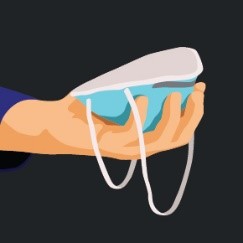
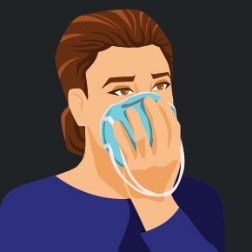
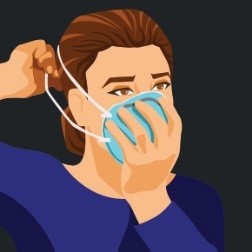
  1. Place the respirator over your nose and under your chin. If the respirator has two straps, place one strap below the ears and one strap above. If you’re wearing a hat, it should go over the straps.
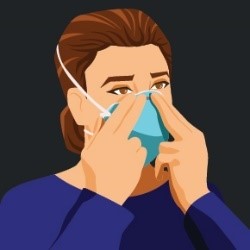
  2. If the respirator has a noseclip (a thin metal bar at the top of the device), use your fingertips from both hands to mold the noseclip firmly against your nose and face. Do not pinch with one hand.
  3. Be sure to conduct a user seal check every time you put on the respirator. This should be done before you enter a patient room. Your respirator may have instructions on how to conduct a user seal check.
  4. Facial hair will cause the respirator to leak, so users should be clean-shaven. Some types of facial hair are acceptable as long as the facial hair does not lie along the sealing area of the respirator.
  5. If you feel dizzy, lightheaded, or nauseated, leave the patient room, remove your respirator, and get medical attention.
  6. Discard the respirator when: (1) it becomes more difficult to breathe through it, (2) if it becomes dirty or (3) the respirator becomes damaged.
  7. Do NOT TOUCH the front of the respirator! It may be contaminated.
  8. Keep your respirator clean and dry. Be sure to read and follow the manufacturer’s recommendations on use and storage.
  9. If supplies are short, facilities should consider applying the appropriate strategies identified in the CDC Strategies for Optimizing the Supply of N95 Respirators.


You can find additional information on how to protect healthcare workers in times of outbreak by regularly visiting the CDC’s Coronavirus information for Healthcare Professionals webpage.

Maryann M. D’Alessandro, PhD, is the Director of the NIOSH National Personal Protective Technology Laboratory

Jaclyn Krah Cichowicz, MA, is a Health Communications Specialist in the in the NIOSH National Personal Protective Technology Laboratory.


Other Resources

Proper Use, Filtration, and Fit – The Three-Legged Stool of Respiratory Protection (Blog)

Required Labeling of a NIOSH-Approved N95 Filtering Facepiece Respirator Infographic

Key Factors of Respiratory Protection Infographic

NIOSH Respirator Filter Classes Infographic

A Particle is a Particle (Video)

N95 Respirators and Surgical Masks (Blog)

Understanding the Difference: Surgical Masks and N95 Respirators Infographic

How to Properly Put on or Take off a Disposable Respirator (Instruction sheet)

Hospital Respiratory Protection Program Toolkit

Filtering out Confusion: Fit Testing (Fact Sheet)

Filtering out Confusion: User Seal Check (Fact Sheet)

Donning, Doffing, and User Seal Checks (Video)

To Beard or not to Beard, That’s a Good Question (Blog)

CDC’s Strategies for Optimizing the Supply of N95 Respirators


Thursday, January 13, 2022

Tips to Spot N95 & KN95 Counterfeit Respirators (CDC)


Counterfeit Respirators / Misrepresentation of NIOSH-Approval

Notice on NIOSH ownership of respirator certification marks

NIOSH has successfully recorded the NIOSH stylized logo with and without text, as well as the certification marks N95, N99, N100, P95, P100, and the term “NIOSH-approved”, with the U.S. Patent and Trademark Office (USPTO). NIOSH, as the certifying federal entity for the N95 Respirator Approval Program, owns these certification marks, meaning that NIOSH controls who can use these marks. Accordingly, NIOSH will let manufacturers use these certification marks only if they become NIOSH-approval holders because of their products satisfying the NIOSH’s regulatory standards set forth in 42 C.F.R. Part 84. While these marks have historically been protected under common law (as opposed to a trademark registration) since they were established by the program regulations, these marks are now registered with the USPTO as federal registrations, as well as in various foreign countries, and are subject to additional protections under the Lanham Act, 15 U.S.C. §§ 1051 et seq. and foreign trademark laws. Thus, any misuse of these marks, including on respirators that have failed to satisfy NIOSH’s regulatory requirements or have not received a NIOSH approval, is a direct violation of applicable trademark laws and NIOSH may pursue action as necessary. This also applies to approval holders that misuse or misplace the marks or terms against the regulations, specifically outlined in 42 C.F.R. Part 84.33.

Counterfeit respirators are products that are falsely marketed and sold as being NIOSH-approved and may not be capable of providing appropriate respiratory protection to workers. When NIOSH becomes aware of counterfeit respirators or those misrepresenting NIOSH approval on the market, we will post them here to alert users, purchasers, and manufacturers.

How to identify a NIOSH-approved respirator:

NIOSH-approved respirators have an approval label on or within the packaging of the respirator (i.e. on the box itself and/or within the users’ instructions). Additionally, an abbreviated approval is on the FFR itself. You can verify the approval number on the NIOSH Certified Equipment List (CEL) or the NIOSH Trusted-Source page to determine if the respirator has been approved by NIOSH. NIOSH-approved FFRs will always have one the following designations: N95, N99, N100, R95, R99, R100, P95, P99, P100.

Signs that a respirator may be counterfeit:

  • No markings at all on the filtering facepiece respirator
  • No approval (TC) number on filtering facepiece respirator or headband
  • No NIOSH markings
  • NIOSH spelled incorrectly
  • Presence of decorative fabric or other decorative add-ons (e.g., sequins)
  • Claims for the of approval for children (NIOSH does not approve any type of respiratory protection for children)
  • Filtering facepiece respirator has ear loops instead of headbands

Check the respirator approval markings using the Example of Correct Exterior Markings on a NIOSH-Approved Filtering Facepiece Respirator graphic.

More Tips to Spot Counterfeit Respirators

Note – Below the most recent listings are additional counterfeit respirators.

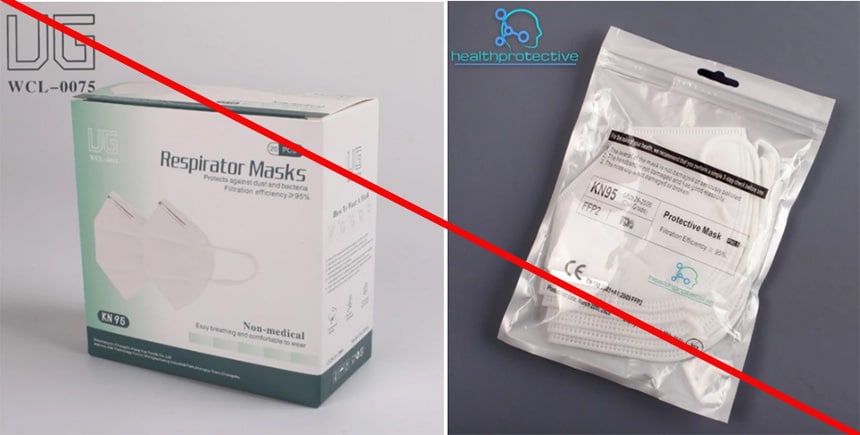
The Health Protective KN95 mask is being marketed as “Certified KN95 respirator mask, adopted by the CDC”.  This statement is misleading because CDC, through NIOSH, does not approve KN95 masks or any other respiratory protective device certified to international standards.

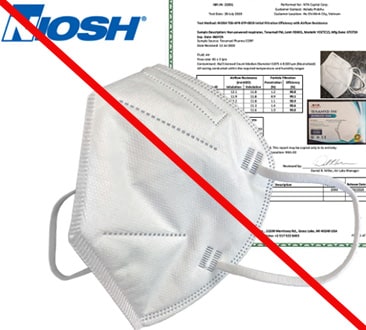
The Health Protective KN95 mask is being marketed as “Certified KN95 respirator mask, adopted by the CDC”. This statement is misleading because CDC, through NIOSH, does not approve KN95 masks or any other respiratory protective device certified to international standards. Additionally, Health Protective is misusing NIOSH test information. The product package indicates it meets Chinese standard GB 2626-2006 and was submitted to NIOSH under an International Respirator Assessment request. It is being marketed using results from the assessment. As stated on the NIOSH website, these results are not to be used by manufacturers, distributors, suppliers, and importers to make claims about their products and/or to influence purchasers and cannot be used to make claims that the product meets NIOSH approval requirements. Changshu City Hengyun Nonwoven Products Co., Ltd. is not a NIOSH approval holder or a private label holder. (1/11/2022)

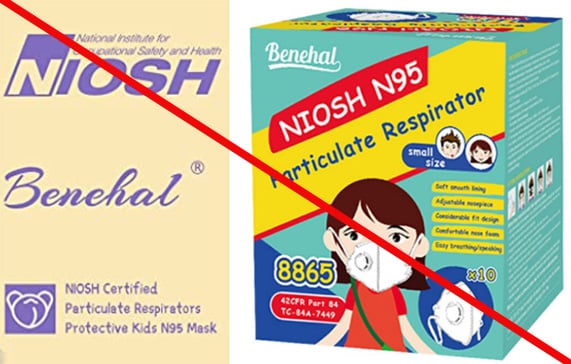
Guangzhou Zhen Tao Culture Media Co., Ltd. is marketing Benehal Model 8865 as a NIOSH approved unit for kids.  NIOSH does not approve filtering facepiece respirators for children.

Guangzhou Zhen Tao Culture Media Co., Ltd. is marketing Benehal Model 8865 as a NIOSH approved unit for kids. NIOSH does not approve filtering facepiece respirators for children. Although Suzhou Sanical Protective Product Manufacturing Co. Ltd. manufactures Benehal Model 8865, under NIOSH approval number TC-84A-7449, this unit is not NIOSH approved as a filtering facepiece respirator for children. (12/17/2021)

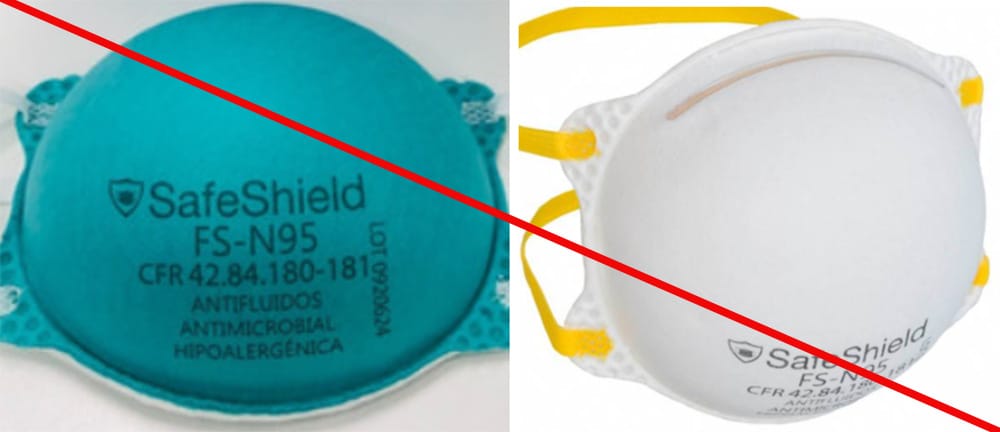
This is an example of a misrepresentation of NIOSH approval. SafeShield’s marketing of model FS-N95 is misleading and may cause users to believe it is NIOSH approved.

This is an example of a misrepresentation of NIOSH approval. SafeShield’s marketing of model FS-N95 is misleading and may cause users to believe it is NIOSH approved. SafeShield references certification to NIOSH CFR 42.84 180-181 and TEB-APR-STP-0059. This information is inaccurate. SafeShield is not a NIOSH approval holder or private label assignee, and model FS-N95 is NOT NIOSH approved. (12/1/2021)

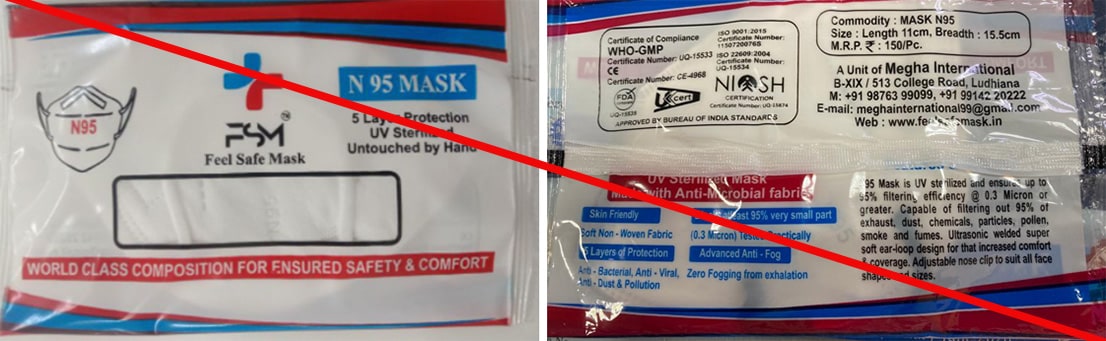
This is an example of a misrepresentation of a NIOSH approval. Megha International is marketing the Feel Safe Mask N95 in a package marked NIOSH Certification.

This is an example of a misrepresentation of a NIOSH approval. Megha International is marketing the Feel Safe Mask N95 in a package marked NIOSH Certification. Megha International is not a NIOSH approval holder or private label assignee. Feel Safe Mask N95 is NOT NIOSH approved. (11/5/2021)

Dongguan AOXING is misusing NIOSH test information for its KN95 Protective Mask model AX-KF95.

Dongguan AOXING is misusing NIOSH test information for its KN95 Protective Mask model AX-KF95. Product was submitted to NIOSH under an International Respirator Assessment request and it is being marketed using results from the assessment. As stated on the NIOSH website, these results are not to be used by manufacturers, distributors, suppliers, and importers to make claims about their products and/or to influence purchasers and cannot be used to make claims that the product meets NIOSH approval requirements. Dongguan AOXING is not a NIOSH approval holder or a private label assignee. (11/5/2021)

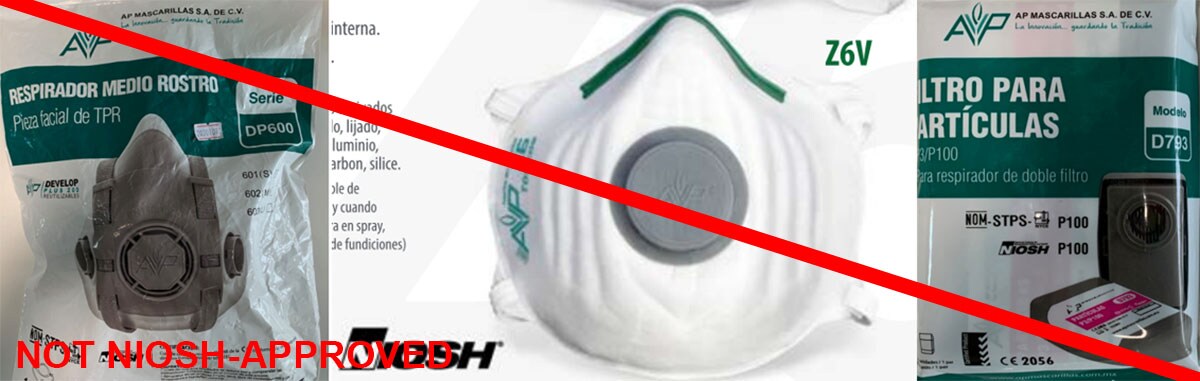
This is an example of a misrepresentation of a NIOSH approval. AP Mascarillas is not a NIOSH approval holder or private label assignee. AP Mascarillas is marketing product using the NIOSH logo, but their respiratory protective devices are NOT NIOSH approved.

This is an example of a misrepresentation of a NIOSH approval. AP Mascarillas is not a NIOSH approval holder or private label assignee. AP Mascarillas is marketing product using the NIOSH logo, but their respiratory protective devices are NOT NIOSH approved. (9/9/2021)

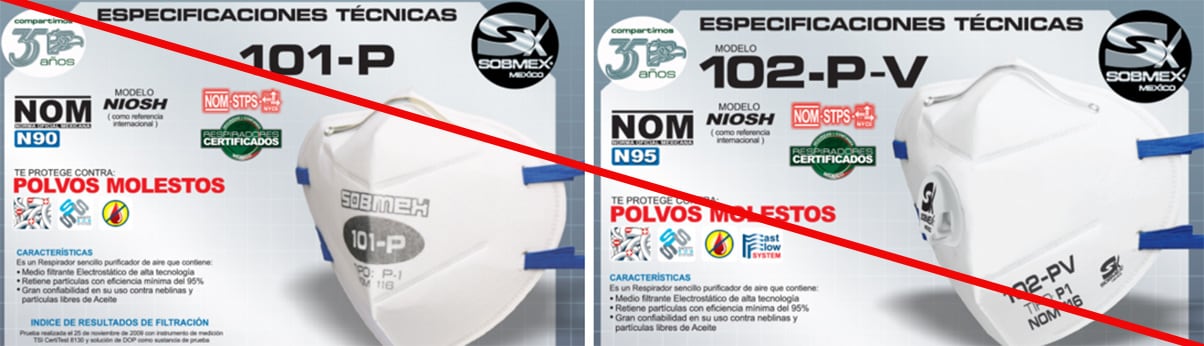
This is an example of a misrepresentation of a NIOSH approval. Sobmex is marketing numerous filtering facepiece respirators with NIOSH listed on the technical specifications sheet, but Sobmex is not a NIOSH approval holder or private label assignee. Sobmex respirators are NOT NIOSH approved.

This is an example of a misrepresentation of a NIOSH approval. Sobmex is marketing numerous filtering facepiece respirators with NIOSH listed on the technical specifications sheet, but Sobmex is not a NIOSH approval holder or private label assignee. Sobmex respirators are NOT NIOSH approved. (9/9/2021)

Moaron is NOT a NIOSH approval holder and they are misrepresenting product as meeting NIOSH approval.

Moaron is NOT a NIOSH approval holder and they are misrepresenting product as meeting NIOSH approval. The product listing claims the filter “meets NIOSH P100-series.” NIOSH only approves whole respirator configurations, not individual components. The Moaron 2091 P100 filter is NOT a component associated with a NIOSH approval. Additionally, it is incorrectly being advertised that it is compatible with other NIOSH-approved products. If this filter is used in place of the filter component associated with the NIOSH-approved respiratory protective device (RPD), it will void the NIOSH approval. (9/9/2021)

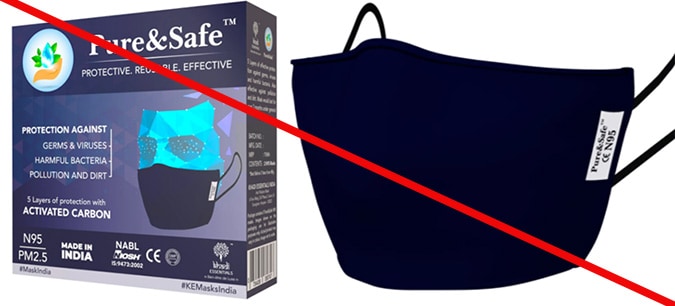
This is an example of a misrepresentation of a NIOSH approval. Pure&Safe is not a NIOSH approval holder or a private label assignee.  The Pure&Safe 5 Layered Reusable Anti-Pollution N95 Face Mask with Activated Carbon Filter is not NIOSH approved.

This is an example of a misrepresentation of a NIOSH approval. Pure&Safe is not a NIOSH approval holder or a private label assignee. The Pure&Safe 5 Layered Reusable Anti-Pollution N95 Face Mask with Activated Carbon Filter is not NIOSH approved. (5/26/2021)

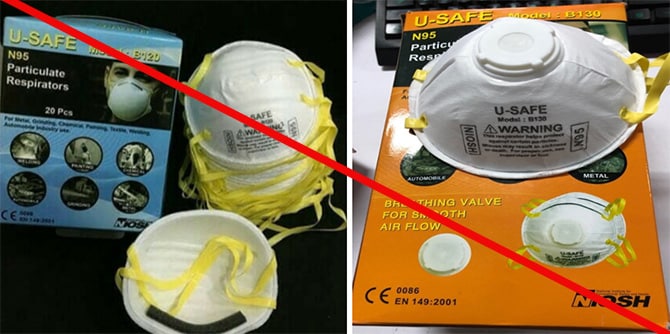
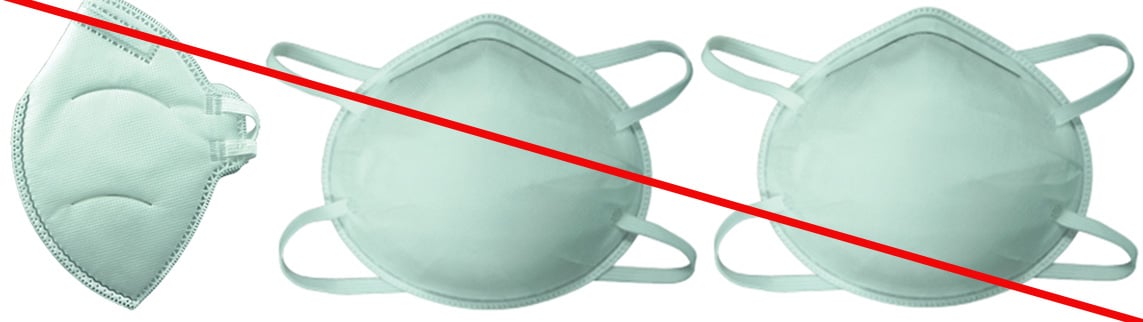
This is an example of a misrepresentation of a NIOSH approval. U-SAFE is not a NIOSH approval holder or a private label assignee. U-SAFE models B120 and B130 N95 particulate respirator are not NIOSH approved.

This is an example of a misrepresentation of a NIOSH approval. U-SAFE is not a NIOSH approval holder or a private label assignee. U-SAFE models B120 and B130 N95 particulate respirator are not NIOSH approved. (4/30/2021)

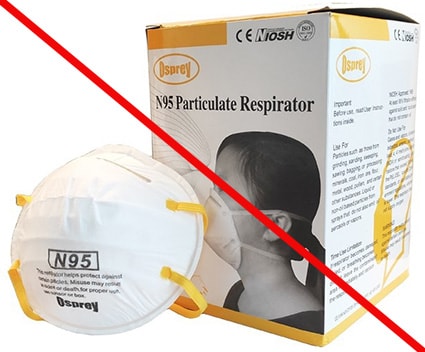
This is an example of a misrepresentation of a NIOSH approval. Osprey is not a NIOSH approval holder or a private label assignee. The Osprey N95 particulate respirator is not NIOSH approved.

This is an example of a misrepresentation of a NIOSH approval. Osprey is not a NIOSH approval holder or a private label assignee. The Osprey N95 particulate respirator is not NIOSH approved. (4/21/2021)

EPC Product, LLC is misrepresenting product manufactured by their company as NIOSH-approved product.  Models sold by EPC, including but not limited to, PT-N95F-01, PT-N95C-02, and PT-N95CS-02 are NOT NIOSH-approved.  EPC Product LLC is not a NIOSH approval holder or a private label holder.

EPC Product, LLC is misrepresenting product manufactured by their company as NIOSH-approved product. Models sold by EPC, including but not limited to, PT-N95F-01, PT-N95C-02, and PT-N95CS-02 are NOT NIOSH-approved. EPC Product, LLC is not a NIOSH approval holder or a private label holder. (3/26/2021)

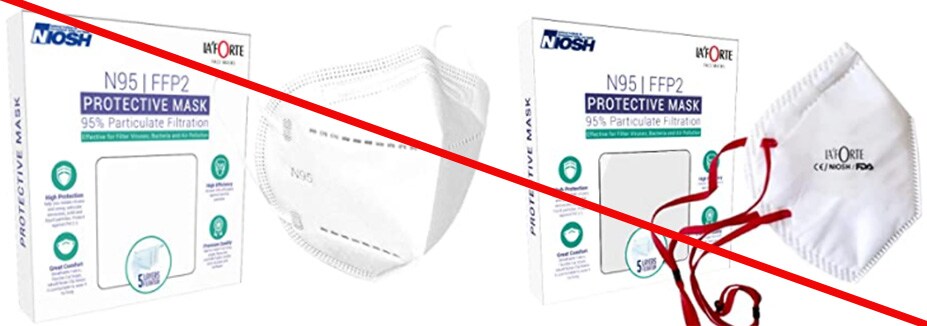
SS Paper Convertors is misrepresenting protective masks as NIOSH-approved.  SS Paper Convertors is not a NIOSH approval holder or private label holder.  La’ Forte brand masks are not NIOSH-approved.

SS Paper Convertors is misrepresenting protective masks as NIOSH-approved. SS Paper Convertors is not a NIOSH approval holder or private label holder. La’ Forte brand masks are not NIOSH-approved. (2/26/2021)

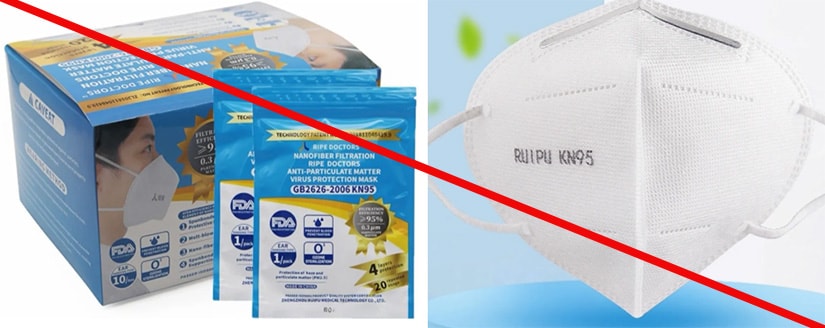
Zhengzhou Ruipu Medical Technology Co., Ltd. is misusing NIOSH test information regarding RUIPU RIPE DOCTORS KN95.

Zhengzhou Ruipu Medical Technology Co., Ltd. is misusing NIOSH test information regarding RUIPU RIPE DOCTORS KN95. The product package indicates it meets Chinese standard GB 2626-2006 and was submitted to NIOSH under an International Respirator Assessment request. It is being marketed using results from the assessment. As stated on the NIOSH website, these results are not to be used by manufacturers, distributors, suppliers, and importers to make claims about their products and/or to influence purchasers and cannot be used to make claims that the product meets NIOSH approval requirements. Zhengzhou Ruipu Medical Technology Co., Ltd. is not a NIOSH approval holder or a private label holder. (2/18/2021)

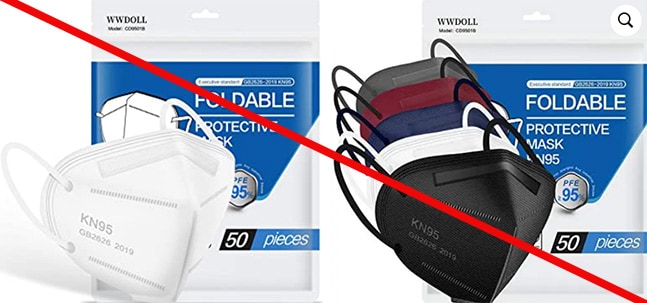
Chengde Technology Co., Ltd. is misusing NIOSH test information regarding WWDOLL model CD9501B KN95 Foldable Protective Masks.

Chengde Technology Co., Ltd. is misusing NIOSH test information regarding WWDOLL model CD9501B KN95 Foldable Protective Masks. The product package indicates it meets Chinese standard GB 2626-2019 and was submitted to NIOSH under an International Respirator Assessment request. It is being marketed using results from the assessment. As stated on the NIOSH website, these results are not to be used by manufacturers, distributors, suppliers, and importers to make claims about their products and/or to influence purchasers and cannot be used to make claims that the product meets NIOSH approval requirements. Chengde Technology Co., Ltd. is not a NIOSH approval holder or a private label holder. (2/18/2021)

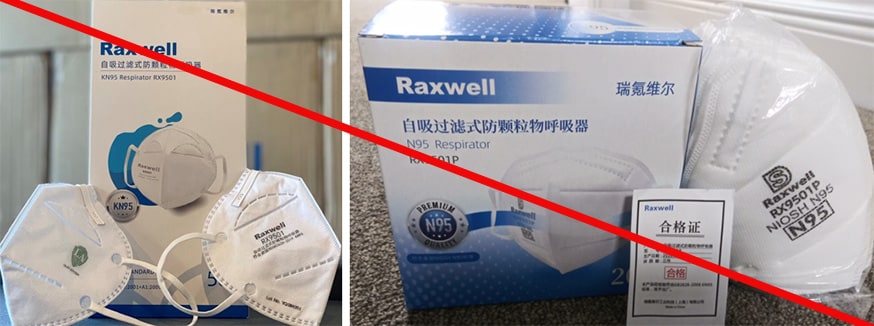
Raxwell model RX9501P N95 is being misrepresented as a NIOSH-approved product.

Raxwell Industrial Technology Co., Ltd. is misusing NIOSH test information regarding Raxwell model RX9501 KN95 Face Masks. The product package indicates it meets Chinese standard GB 2626-2006 and was submitted to NIOSH under an International Respirator Assessment request. It is being marketed using results from the assessment. As stated on the NIOSH website, these results are not to be used by manufacturers, distributors, suppliers, and importers to make claims about their products and/or to influence purchasers and cannot be used to make claims that the product meets NIOSH approval requirements. Additionally, Raxwell model RX9501P N95 is being misrepresented as a NIOSH-approved product. Raxwell Industrial Technology Co., Ltd. is not a NIOSH approval holder or a private label holder. (2/18/2021)

This is an example of a misrepresentation of a NIOSH-approved product. Products labeled TENAMYD FM and sold by Clean Life 360 are NOT NIOSH approved.  (2/4/2021)

This is an example of a misrepresentation of a NIOSH-approved product. Products labeled TENAMYD FM and sold by Clean Life 360 are NOT NIOSH approved. (2/4/2021)


N95 Masks vs. KN95 Masks: Which Ones Work Best to Protect You Against Covid? (Rolling Stone)


Products featured are independently selected by our editorial team and we may earn a commission from purchases made from our links; the retailer may also receive certain auditable data for accounting purposes.

Though Covid vaccinations are currently taking place across the country (and around the world), officials say you shouldn’t be taking off your masks just yet – especially if you’re in crowded places or starting to travel. Even if you have received your vaccine, medical experts continue to promote the wearing of face coverings as an effective way to prevent the spread of Covid-19, the Delta variant, the new Omicron variant and other potentially harmful viruses in the air.

Airlines are also still requiring the use of masks when traveling, with FAA guidelines mandating the wearing of face masks in-flight, except for brief periods when eating or drinking. While there are a number of good face mask options for traveling, the most effective face masks according to researchers continues to be a protective N95 mask.

Also sometimes referred to as N95 respirators, these masks are not to be confused with KN95 masks, which have a similar name, but are held to entirely different standards. Once reserved for construction, medical or lab jobs, the best N95 masks are now available to the public, with a number of companies pivoting to manufacturing and selling N95 masks for sale online.

But how does an N95 mask work, and how is it different from a KN95 mask? And is an N95 mask effective against Covid and Omicron? We break down what you need to know, plus review some of the best N95 and KN95 masks we’ve tested, that you can buy online.

buy n95 respirator

DMB Supply

Buy: N95 Particulate Respirator (50-Pack) at $179.99

N95 Masks vs. KN95 Masks: Similarities and Differences

Both N95 masks and KN95 masks are made from multiple layers of synthetic material (typically a polypropylene plastic polymer) and are designed to be worn over the mouth and nose. Straps behind your ear help to hold the mask in place. Both masks must filter out and capture 95 percent of tiny 0.3 micron particles in the air (hence the “95” in the names).

“N95 masks offer protection against particles as small as 0.3 microns in size, and while the coronavirus itself is around 0.1 microns in size, it’s usually attached to something larger, such as droplets that are generated by everyday activities like breathing and talking,” explains Shaz Amin, founder of WellBefore (formerly Honest PPE Supply), which sells masks, face shields, wipes and sanitizers on its website. “Due to the multiple layers of non-woven fabric and melt blown fabric in the N95 masks, the strong material makeup of these masks is great at preventing airborne particles from entering through your mouth and nose.”


NIOSH N95 Foldable Mask

N95 Mask Co.

Buy: NIOSH N95 Foldable Mask (20-Pack) at $59.99

But how are N95 masks different from KN95 masks? The main difference lies in how the masks are certified. “In general,” says Sean Kelly, founder of New Jersey-based PPE of America, “N95 is the U.S. standard, and the KN95 is the China standard.” Because of this, only N95 masks are approved for health-care use in the United States, even though KN95 masks have many of the same protective properties.

buy kn95 mask online

WellBefore

Buy: KN95 Face Mask at $1.19

N95 masks must pass a rigorous inspection and certification process from the National Institute for Occupational Safety and Health (NIOSH), which is part of the CDC. Companies making KN95 masks, meanwhile, can seek approval from the FDA, through an emergency authorization for a foreign certification which meets the 95 percent filtration requirement. The FDA says the manufacturer of KN95 masks must also provide documentation that the masks and materials used are authentic.

According to Kelly, whose company was among those tapped by Connecticut lawmakers to provide personal protective equipment to frontline workers in the state, certification of KN95 masks include a requirement on “fit testing,” which tests the air inside and outside of the mask, as well as how the mask fits around your face. The N95 masks do not have these requirements to meet their standard.

Still, he says, “N95 mask requirements are a bit more stringent regarding the pressure drop in the mask during breathing in, which makes the N95 more breathable than most KN95 masks. The N95 masks have similar requirements for exhaling. These requirements,” Kelly says, “make the N95 mask a bit more advanced with the overall breathability for users.”

N95 Medical Supplies

Buy: N95 Soft-Shell Mask (20-Pack) at $49.99

Keep in mind, the certifications mentioned above only refer to the country in which the standards and regulations were created, not where the masks are made. Most N95 masks are still made in China. Similarly, the CDC has authorized the use of KN95 masks as a suitable alternative to N95 masks for its response to Covid-19 and the new Omicron variant.

“The KN95 is practically equivalent to N95 in every aspect,” says Amin. “Customers seem to believe that the N95 is superior at blocking airborne particles, but the KN95 is just as good, if not better,” he insists. “Many N95 [masks] are also made in parts of China and Asia so the notion that all N95 are U.S.-created is inaccurate as well.”

The FDA has released a list of approved KN95 masks here. You can view the CDC list of approved N95 masks here.

What Does an N95 Mask Protect Against?

According to a report cited by National Center for Biotechnology Information, part of the United States National Library of Medicine and National Institutes of Health, N95 respirators have two main advantages over simple cloth coverings or surgical masks. First, the report found that N95 masks are more than 95 percent efficient at filtering 0.3-μm particles — particles that are even smaller than the droplets created when talking, coughing, or sneezing — making them an effective way to filter out germs and bacteria. The study also found that N95 masks often fit better over the face and around the neck, ensuring that droplets and particles do not leak around the mask. “Even if N95 filtration is unnecessary,” the report states, “N95 fit offers advantages over a loose-fitting surgical mask by eliminating leakage around the mask.”

DMB Supply

Buy: N95 Particulate Respirator (50-Pack) at $179.95

The main reason for the N95 mask’s popularity is efficacy, Kelly says. “We know they work and have been used for decades in both health-care and industrial environments,” he says, citing their use in everything from hospitals to labs to construction sites. “When a firefighter risks their life to go into a burning building, they go into that building wearing all the lifesaving gear,” Kelly continues. “They do this to not only protect their own life so they could save others, but to also go home to their family and keep doing what they are dedicated to do. Frontline health-care workers and those who have close contact with others are no different than firefighters when it comes to taking all necessary means to protect themselves from contracting Covid-19. The first and foremost safety precaution for a health-care worker to take is to wear a NIOSH-approved N95 face mask.”

Note: the FDA says N95 masks are not designed to be used by children or people with significant facial hair. One of the main benefits of an N95 mask is its ability to secure a tight seal around the face; the FDA says a child’s face or a face with a beard will not allow the mask to offer the same protection.

Another thing to remember: “They are not a magic bullet,” cautions Mia Sultan, CEO of the independent preventative-care company N95 Mask Co. “While [N95 masks] offer increased protection, they are not a replacement for social distancing, hand hygiene, and limiting person-to-person interactions whenever possible.”

Are N95 Masks Reusable?

N95 masks are not meant to be reused. “To my shock and dismay, some people tell me they wear the same mask for days or even a week without changing,” Kelly says. “That is not only stupid, but extremely dangerous, especially if their mask was not decontaminated by one of the newer decontamination machines.”

Related: This UV Sanitizer Kills 99.99 Percent of Germs on Your Devices

Unlike cloth face coverings, which can be machine-washed and worn dozens of times, the best N95 masks are only effective when worn once or twice. You should discard the masks immediately afterward; they are not meant to be washed and reused.

Per FDA guidelines, discard your N95 respirator by placing it in a plastic bag and put it immediately in the trash. Wash your hands after handling the used respirator.

Are KN95 Masks Reusable?

KN95 masks, meantime, are meant for one-time use as well, though Amin says some studies are coming out that show that some KN95 masks could be effectively reused.

“What was more interesting,” he adds, “is that they said when they reused the mask after spraying it with ethanol, air drying it and then vacuum drying it, it showed effective filtration after that as well.”


where to buy kn95 mask

Public Goods

Buy: KN95 Mask (10-Pack) at $9.95

How to Tell Fake N95 Masks vs. Real N95 Masks

There are some precautionary steps you can take to determine if the masks you are buying are counterfeit. Kelly suggests six things to look out for, which may suggest a “fake” or uncertified N95 mask:

  1. The NIOSH approval stamp is either missing or spelled wrong on the face of the mask.
  2. The mask has ear loops instead of headbands (headbands are used for a tighter fit).
  3. The TC approval number is not listed on the face of the mask or headband.
  4. The company claims approval for use by children.
  5. There is a presence of decorative add-ons.
  6. The manufacturing lot number is not visible on the face of the mask.

The CDC’s website has more tips on how to spot counterfeit N95 respirators here.

The same goes for spotting fake KN95 masks vs. real KN95 masks. Amin says to do your research and make sure you’re ordering your masks from a legitimate site. “I highly recommend all customers do their diligence on where they buy their KN95 masks from,” he says. “Ask for the lab results which show the filtration levels, research the factory they’re buying the masks from, ask for videos of the water test where you pour water into the mask and look for droplets passing through the other side, stress test the ear loop bands and make sure that all the data they have given you adds up. If the company that you buy your KN95 masks from keeps changing their manufacturers repeatedly,” he adds, “that’s a red flag that they are just flipping masks from multiple middlemen or brokers and don’t have proper quality control.”

N95 Medical Supplies

Buy: N95 NIOSH Hard Shell Mask (25-Pack) at $49.95

Where to Buy N95 Masks Online

A number of companies have made both N95 masks and KN95 masks available online. In addition to blocking up to 95 percent of small particles, these masks also help to neutralize germs and viruses on the surface to prevent potential exposure into your airstream and lungs. The masks are comfortable to wear and can be adjusted to fit snug against your face, per FDA recommendations.

blue bear protection n95 masks

zhangxu

Buy: Makrite N95 Masks (20-Pack) at $29.99

Smyrna, GA-based site N95 Medical Supplies also has a variety of N95 masks you can buy online, including a 20-pack of N95 NIOSH Masks ALG Soft Shell that retail for $59.99 per order. The site also sells N95 NIOSH Harley Hard Shell masks, which you can also buy for $59.99 at the time of this writing.

Where to Buy KN95 Masks Online

A handful of companies have also pivoted their offerings to include KN95 masks. Among them: personal-care and accessories brand Public Goods. The site says its KN95 respirator masks are made from five layers of filters and use a mechanical filter to block up to 95 percent of harmful particles in the air from your nose and mouth. A nose clip helps to form a tight seal around your face.

where to buy kn95 mask

Public Goods

Buy: KN95 Mask (10-Pack) at $9.95

Where to Buy N95 Masks on Amazon

You can now buy a number of N95 masks on Amazon, with the ability to read customer reviews and see ratings to find the best-fitting mask for you.

One solid bet is the popular N95 Pouch Respirators made by Kimberly-Clark, which were completely sold out last year. The “duckbill”-style masks are Made in the USA, and have a larger “breathing chamber,” with a flexible nose piece and adjustable straps to wear around the head. Kimberly-Clark also says that their masks are also “up to 75% more breathable than the NIOSH minimum requirement.”

N95 Pouch Respirators

Amazon

Buy: N95 Pouch Respirators (50-Pack) at $57.15

This ten-pack pack of N95 masks on Amazon below have a 4.4-star rating (out of five) from more than 4000 reviewers online. Reviewers praise the comfortable, latex-free material and the way the mask slots easily under eyewear, whether you’re wearing protective goggles or just regular glasses.

NIOSH Certified Particulate Respirators

Amazon

Buy: NIOSH-Certified Particulate Respirators at $25.95

Can the Public Buy N95 Masks?

Companies like N95 Mask Co. are making N95 masks available to the public, but the lingering question remains: With stories of hospitals and frontline workers needing masks, will selling them to the public deplete stock for those who require it most?

Amin says WellBefore continues to prioritize those who need the masks first. “Giving back is an essential part in everything that I do and core to how I was raised,” he says. “Every single week we make donations to non-profits, businesses, religious organizations and people in need because it’s our duty to help where we can. We’ve collectively donated almost 100,000 PPE products to multiple organizations around the U.S., and we plan to keep going.” Still, he says his company’s ability to secure large quantities of masks has made it easier for him to sell them for just $1.99 per mask, when other companies have been — in his words — “price gouging.”

Sultan says earlier logistical problems that clogged production times for making masks have now cleared up, and health-care workers have been able to receive the masks they need. “As supply chains have normalized and institutions no longer face the shortages seen early in the pandemic, we believe it makes sense to expand the percentage of the general population who are able to protect themselves at a higher level in an effort to further slow the spread of Covid-19,” she says, adding that the company has donated thousands of masks out of pocket to hospitals across the country.

Kelly, from PPE America, agrees that it’s a “top priority” for the federal government to “replenish stockpiles for military, FEMA, and state and local governments who then may distribute those supplies to local health-care systems.” Still, he says, there has been a rise in companies manufacturing N95 masks in large quantities, effectively ensuring that those who need — and want — the masks will be able to receive them. “There’s no doubt that health-care workers should be the number-one priority for N95 mask deliveries,” Kelly says. “[But] things are improving, and I don’t believe there’s a need for this drastic action since there’s plenty of N95 product available now or will be [available] in the coming months.”

As for those who question whether sites should be selling N95 masks for profit, Kelly insists it’s no different from what healthcare and “big pharma” companies have been doing for years. “Are these companies not in business to generate a profit for their shareholders?” he asks. “Since inception, PPE of America was not established to be a not-for-profit company, and we have every right to generate a profit. If we did not, we could not be in business doing what we do best — assisting those who are procuring quality PPE products at fair market prices.”

“Every day we do our part to help fight Covid-19 by supplying access to PPE products to those who need them the most,” Kelly says, citing a recent donation of “tens of thousands” of surgical masks to hospitals and medical organizations. “As we continue to grow and expand our services, we will continue to do our best to be there for those who need our assistance during these stressful times.”