
With U.S. bombs raining down on Iran and Tehran’s leaders
responding by hitting targets across the Persian Gulf and restricting transit
through the Strait of Hormuz, it is fair to suggest that the present moment
represents a low in relations between the two countries.
But the bad blood isn’t new: The U.S. and Iran have been in conflict for decades – at least since the U.S. helped overthrow a democracy-minded prime minister, Mohammed Mossadegh, in August 1953. The U.S. then supported the long, repressive reign of the Shah of Iran, whose security services brutalized Iranian citizens for decades. The two countries have been particularly hostile to each other since Iranian students took over the U.S. Embassy in Tehran in November 1979, resulting in economic sanctions and the severing of formal diplomatic relations between the nations.
Since 1984, the U.S. State Department has listed Iran as a “state sponsor of terrorism,” alleging the Iranian government provides terrorists with training, money and weapons. Some of the major events in U.S.-Iran relations highlight the differences between the nations’ views, but others arguably presented real opportunities for reconciliation.
1953: US overthrows Mossadegh
In 1951, the Iranian Parliament chose a new prime minister, Mossadegh, who then led lawmakers to vote in favor of taking over the Anglo-Iranian Oil Company, expelling the company’s British owners and saying they wanted to turn oil profits into investments in the Iranian people. The U.S. feared disruption in the global oil supply and worried about Iran falling prey to Soviet influence. The British feared the loss of cheap Iranian oil.
President Dwight Eisenhower decided it was best for the
U.S. and the U.K. to get rid of Mossadegh. Operation Ajax, a
joint CIA-British operation, convinced the Shah of Iran, the country’s
monarch, to dismiss Mossadegh and drive him from office by force. Mossadegh was
replaced by a much more Western-friendly prime minister, handpicked
by the CIA.

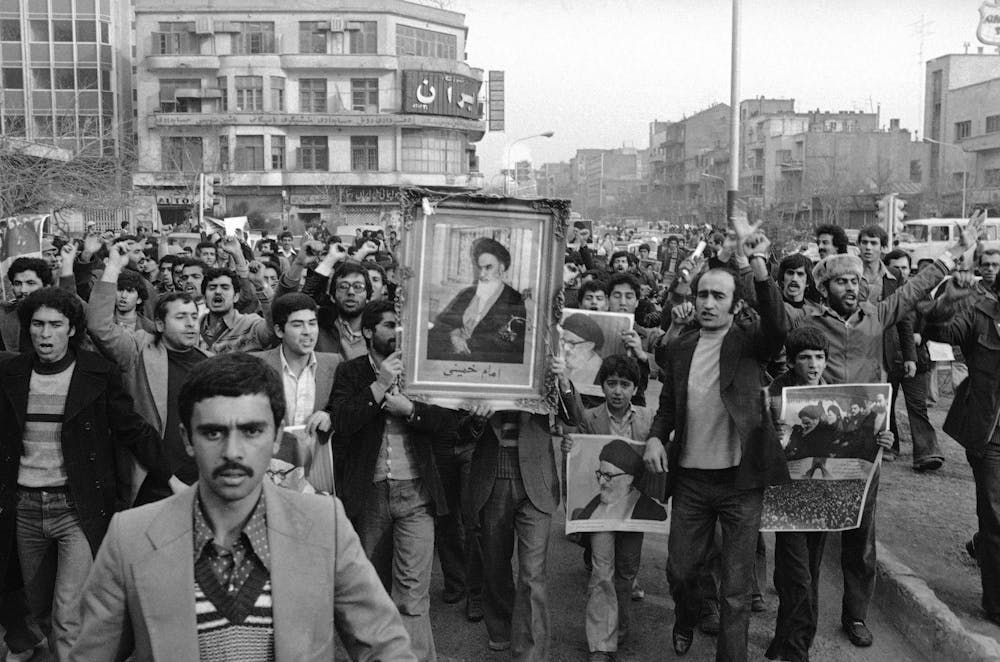
Demonstrators in Tehran demand the establishment of an
Islamic republic. AP
Photo/Saris
1979: Revolutionaries oust the shah, take hostages
After more
than 25 years of relative stability in U.S.-Iran relations, the Iranian
public had grown unhappy with the social and economic conditions that
developed under the dictatorial rule of Shah Mohammad Reza Pahlavi.
Pahlavi enriched himself and used American aid to fund
the military while many Iranians lived in poverty. Dissent was often violently
quashed by SAVAK,
the shah’s security service. In January 1979, the shah left Iran,
ostensibly to seek cancer treatment. Two
weeks later, Ayatollah Ruhollah Khomeini returned from exile in Iraq
and led a drive to abolish the monarchy and proclaim an Islamic government.

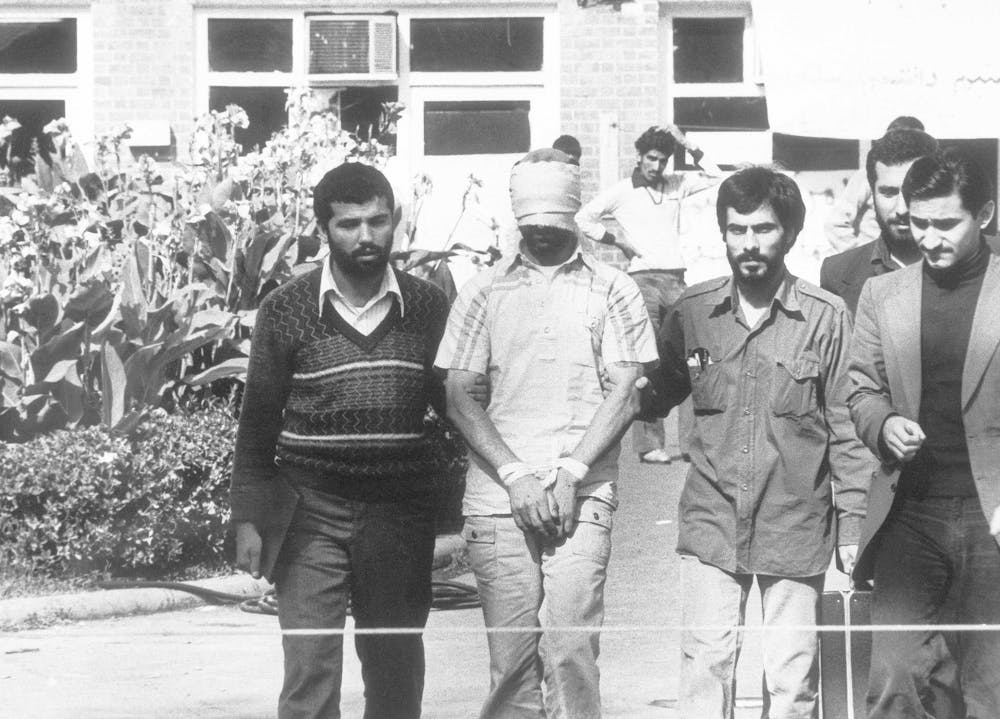
Iranian students at the U.S. Embassy in Tehran show a
blindfolded American hostage to the crowd in November 1979. AP
Photo
In October 1979, President
Jimmy Carter agreed to allow the shah to come to the U.S. to seek
advanced medical treatment. Outraged Iranian students stormed
the U.S. Embassy in Tehran on Nov. 4, taking 52 Americans hostage.
That convinced Carter to sever U.S. diplomatic relations with Iran on April 7,
1980.
Two weeks later, the U.S. military launched a mission to
rescue the hostages, but it
failed, with aircraft crashes killing eight U.S. servicemembers.
The shah died in Egypt in July 1980, but the hostages
weren’t released until Jan. 20, 1981, after 444 days of captivity.

An Iranian cleric, left, and an Iranian soldier wear gas
masks to protect themselves against Iraqi chemical weapons attacks in May 1988. Kaveh
Kazemi/Getty Images
1980-1988: US tacitly sides with Iraq
In September 1980, Iraq invaded Iran,
an escalation of the two countries’ regional rivalry and religious differences:
Iraq was governed by Sunni Muslims but had a Shia Muslim majority
population; Iran
was led and populated mostly by Shiites.
The U.S. was concerned that the conflict would limit the
flow of Middle Eastern oil and wanted to ensure the conflict didn’t affect its
close ally, Saudi Arabia.
The U.S. supported
Iraqi leader Saddam Hussein in his fight against the anti-American
Iranian regime. As a result, the U.S. mostly turned a blind eye toward
Iraq’s use
of chemical weapons against Iran.
U.S. officials moderated their usual opposition to those
illegal and inhumane weapons because the U.S. State Department did not “wish to play into
Iran’s hands by fueling its propaganda against Iraq.” In 1988, the war ended
in a stalemate. More than 500,000 military and 100,000 civilians died.
1981-1986: US secretly sells weapons to Iran
The U.S. imposed
an arms embargo after Iran was designated a state sponsor of terrorism
in 1984. That left the Iranian military, in the middle of its war with Iraq,
desperate for weapons and aircraft and vehicle parts to keep fighting.
The Reagan administration decided
that the embargo would likely push Iran to seek support from the
Soviet Union, the U.S.’s Cold War rival. Rather than formally end the embargo,
U.S. officials agreed to secretly
sell weapons to Iran starting in 1981.
The last shipment, of anti-tank missiles, was in October
1986. In November 1986, a Lebanese magazine exposed the deal. That revelation
sparked the Iran-Contra scandal in the U.S., with Reagan’s officials found to
have collected money from Iran for the weapons and illegally
sent those funds to anti-socialist rebels – the Contras – in
Nicaragua.

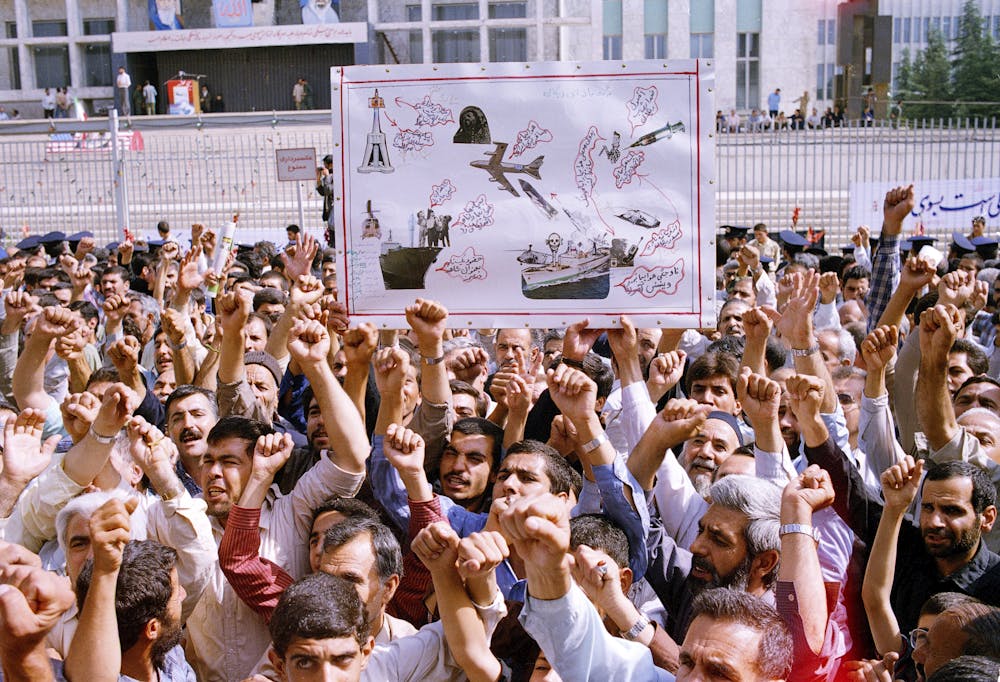
At a mass funeral for 76 of the 290 people killed in the
shootdown of Iran Air 655, mourners hold up a sign depicting the incident. AP
Photo/CP/Mohammad Sayyad
1988: US Navy shoots down Iran Air flight 655
On the morning of July 8, 1988, the USS Vincennes, a
guided missile cruiser patrolling in the international waters of the Persian
Gulf, entered
Iranian territorial waters while in a skirmish
with Iranian gunboats.
Either during or just after that exchange of gunfire, the Vincennes crew mistook a passing civilian Airbus passenger jet for an Iranian F-14 fighter. They shot it down, killing all 290 people aboard. The U.S. called it a “tragic and regrettable accident,” but Iran believed the plane’s downing was intentional. In 1996, the U.S. agreed to pay US$131.8 million in compensation to Iran.
1997-1998: The US seeks contact
In August 1997, a moderate reformer, Mohammad Khatami, won Iran’s presidential election. U.S. President Bill Clinton sensed an opportunity. He sent a message to Tehran through the Swiss ambassador there, proposing direct government-to-government talks.
Shortly thereafter, in early January 1998, Khatami gave
an interview to CNN in which he expressed “respect for the
great American people,” denounced terrorism and recommended an “exchange of
professors, writers, scholars, artists, journalists and tourists” between the
United States and Iran.
However, Supreme Leader Ayatollah Ali Khamenei didn’t agree, so not much came of the mutual overtures as Clinton’s time in office came to an end. In his 2002 State of the Union address, President George W. Bush characterized Iran, Iraq and North Korea as constituting an “Axis of Evil” supporting terrorism and pursuing weapons of mass destruction, straining relations even further.

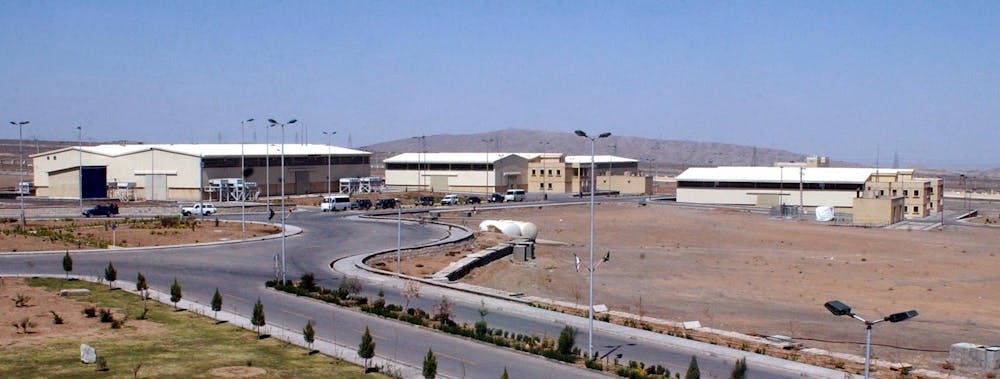
Technicians enriched uranium inside these buildings at
the Natanz nuclear facility in Iran. AP
Photo/Vahid Salemi
2002: Iran’s nuclear program raises alarm
In August 2002, an exiled rebel group announced that Iran had been secretly working on nuclear weapons at two installations that had not previously been publicly revealed. That was a violation of the terms of the Nuclear Nonproliferation Treaty, which Iran had signed, requiring countries to disclose their nuclear-related facilities to international inspectors. One of those formerly secret locations, Natanz, housed centrifuges for enriching uranium, which could be used in civilian nuclear reactors or enriched further for weapons.
Starting in roughly 2005, U.S. and Israeli government cyberattacks together reportedly targeted the Natanz centrifuges with a custom-made piece of malicious software that became known as Stuxnet. That effort, which slowed down Iran’s nuclear program was one of many U.S. and international attempts – mostly unsuccessful – to curtail Iran’s progress toward building a nuclear bomb.
2003: Iran writes to Bush administration

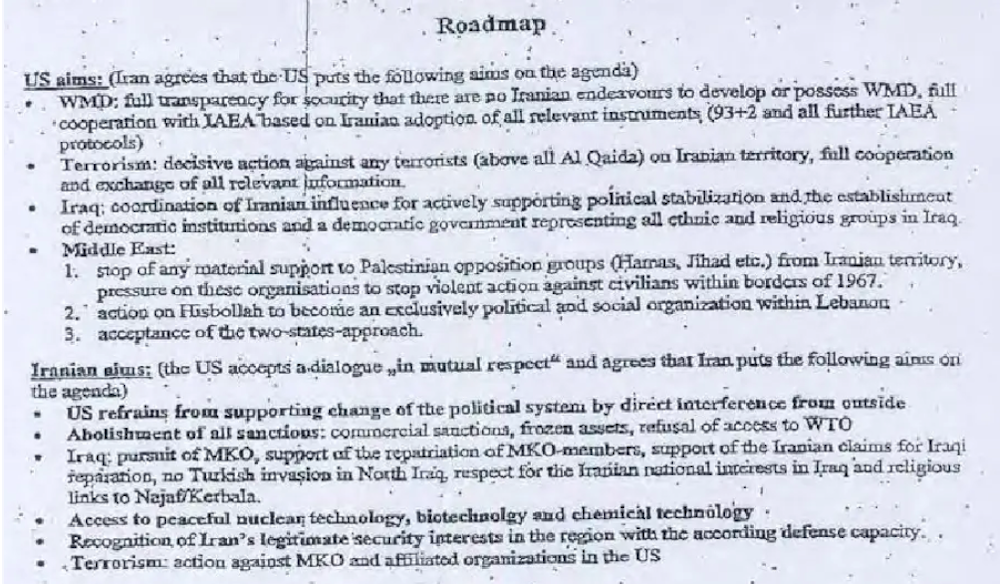
An excerpt of the document sent from Iran, via the Swiss
government, to the U.S. State Department in 2003 appears to seek talks between
the U.S. and Iran. Washington
Post via Scribd
In May 2003, senior Iranian officials quietly contacted
the State Department through the Swiss embassy in Iran, seeking “a
dialogue ‘in mutual respect,’” addressing four big issues: nuclear weapons,
terrorism, Palestinian resistance and stability in Iraq.
Hardliners in the Bush administration weren’t interested in any major reconciliation, though Secretary of State Colin Powell favored dialogue and other officials had met with Iran about al-Qaida. When Iranian hardliner Mahmoud Ahmadinejad was elected president of Iran in 2005, the opportunity died. The following year, Ahmadinejad made his own overture to Washington in an 18-page letter to President Bush. The letter was widely dismissed; a senior State Department official told me in profane terms that it amounted to nothing.

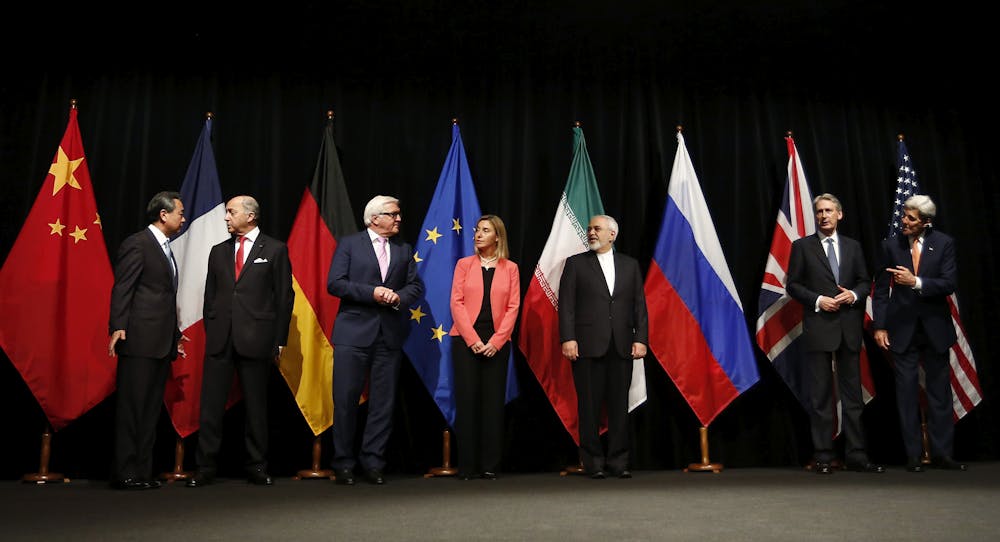
Representatives of several nations met in Vienna in July
2015 to finalize the Iran nuclear deal. Austrian
Federal Ministry for Europe, Integration and Foreign Affairs/Flickr
2015: Iran nuclear deal signed
After a decade of unsuccessful attempts to rein in Iran’s nuclear ambitions, the Obama administration undertook a direct diplomatic approach beginning in 2013. Two years of secret, direct negotiations initially bilaterally between the U.S. and Iran and later with other nuclear powers culminated in the Joint Comprehensive Plan of Action, often called the Iran nuclear deal.
Iran, the U.S., China, France, Germany, Russia and the
United Kingdom signed the deal in 2015. It severely limited Iran’s capacity to
enrich uranium and mandated that international
inspectors monitor and enforce Iran’s compliance with the agreement.
In return, Iran was granted relief from international and
U.S. economic sanctions. Though the inspectors regularly certified that Iran
was abiding by the agreement’s terms, President Donald Trump withdrew from the
agreement in May 2018.
2020: US drones kill Iranian Maj. Gen. Qassem
Soleimani
On Jan. 3, 2020, an American drone fired a missile that killed Maj. Gen. Qassem Soleimani, the leader of Iran’s elite Quds Force. Analysts considered Soleimani the second most powerful man in Iran, after Supreme Leader Ayatollah Khamenei. At the time, the Trump administration asserted that Soleimani was directing an imminent attack against U.S. assets in the region, but officials have not provided clear evidence to support that claim. Iran responded by launching ballistic missiles that hit two American bases in Iraq.

A billboard featuring a portrait of Maj. Gen. Qassem
Soleimani. Morteza
Nikoubazl/NurPhoto via Getty Images
2023: The Oct. 7 attacks on Israel
Hamas’ brazen attack on Israel on Oct. 7, 2023, provoked
a fearsome militarized response from Israel that continues today and served
to severely
weaken Iran’s proxies in the region, especially Hamas – the
perpetrator of the attacks – and Hezbollah in Lebanon.
2025: Trump 2.0 and Iran
Trump initially saw an opportunity to forge a new nuclear
deal with Iran and to pursue other
business deals with Tehran. Once inaugurated for his second term,
Trump appointed
Steve Witkoff, a real estate investor who is the president’s friend, to
serve as special envoy for the Middle East and to lead negotiations.
Negotiations for a nuclear deal between Washington and
Tehran began in April, but the countries did not reach a deal. They were
planning a new round of talks when Israel struck Iran with a series of
airstrikes on June 13, forcing the White House to
reconsider is position.
On June 22, in the early morning hours, the U.S. chose to act decisively in an attempt to cripple Iran’s nuclear capacity, bombing three nuclear sites and causing what Pentagon officials called “severe damage.” The war lasted 12 days, during which Trump declared that Iranian nuclear sites had been “totally obliterated” – a claim denied by Tehran.
2026: Simmering conflict turns into hot war
In early 2026, successive rounds of indirect talks took place between Iran and representatives from the U.S. administration. They followed major unrest in Iran during which Trump told protesters that “help is on its way.” Then, on Feb. 28, the U.S. and Israel began bombing Iran in an operation the U.S. called “Epic Fury.” In the initial wave of airstrikes, Supreme Leader Ali Khamenei and other senior members of the Islamic Republic were killed. Tehran responded by hitting targets across the Gulf, turning the conflict into a wider, regional affair.
The Conversation. This is an updated version of a story
originally published on June 17, 2025.



No comments:
Post a Comment
Note: Only a member of this blog may post a comment.