Sunday, January 9, 2022

“Almost half of teachers are thinking about leaving their jobs. Where does that leave America?” (Forbes)


We’re at a major tipping point in education. According to a recent survey, 48% of teachers admitted that they had considered quitting within the last 30 days. Of that number, 34% said they were thinking about leaving the profession entirely.

Understaffing has plagued schools for years, but it’s now reaching epic proportions. At a conference last month, I sat around the table with four superintendents from various parts of the country and asked them, “What percent of teachers quitting would create a cataclysmic drop in your organization’s ability to educate young people?” The answers were all shockingly low—with one superintendent answering, “One. One teacher quitting would hurt us in a big way.”

Teachers and administrators alike are stressed, overworked and at the end of their rope. After the tremendous pressures of the past two years, they have nothing more to give. They are already giving everything—time, energy, mental wellbeing, and heart. They’re beyond tired. They’re exhausted. Conditions in the education field have always trended toward demanding, but today they’re a recipe for burnout—which teachers experience almost twice as much as other government employees. 

At the same time, teachers are very hard to replace. The specialization and requirements inherent to the field of education make it extremely difficult to expand the talent pool, as other fields are often able to do. It’s not sustainable. And as a nation, we’re about to feel it.

The vicious cycle

In order to reach and teach students effectively, teachers must forge a human connection with them. Today’s younger generations simply will not move forward in their education and career journey without that connection. This is a non-negotiable; it’s just who they are. 

The vast majority of teachers truly want to forge that meaningful connection with students. In fact, for many it was the driving force behind their decision to enter the profession. But, understaffed and overworked as they are, many simply have no time to show students that they see, hear, and care about them. Survival mode—where many teachers have lived for the past two years—doesn’t allow much room for relationship building. 

This creates a vicious cycle. Students aren’t performing, so more burdens are placed on teachers to help students hit the mark, thus decreasing teachers’ time and bandwidth to forge a human connection with students that is the basis for all learning. Teachers’ legs are cut out from under them, yet they’re still expected to carry their students across the finish line. It’s a gridlock. 

The fallout

What’s the fallout of all this burnout and lack of connection? We’ll see significant drops in three vital areas:

A drop in young people entering the profession. Teachers and students spend hours every day together—and unfortunately, stress isn’t easy to hide. Even teachers that don’t actually mention their stress to the class manifest it in a thousand small ways that young people can observe. 

The elevated and prolonged levels of teacher stress are warning the next generation not to become teachers. Who wants that kind of life, for that kind of money? Obviously, fewer people entering education will only exacerbate the teacher and substitute shortage for the long term. The skills gap is going to hit the education field hard. There just won’t be enough teachers to go around. 

A drop in education quality. As current educators flee the profession and the next generation avoids entering it, we may see class sizes skyrocket—further straining the teachers that remain. Without a healthy student-teacher ratio, the quality of instruction, the individual time spent with each student, and any vestige of a human connection will inevitably drop. 

The quality of education will also drop if states, desperate to staff their schools, lower the bar for teacher requirements. Such a move could potentially bring into the classroom “teachers” or substitutes who lack the necessary training and skills to teach effectively. A lower-quality educational experience will hurt not just the students, but soon the workforce and economy in significant ways. 

A drop in graduation rates. How long before students, unengaged in school and with no human connection there, realize that there are ways they can succeed without that diploma? The gig economy has a place for them. There’s always bitcoin. And no one will question their graduation status if they start their own business. 

Skills, rather than diplomas and degrees, are coming to the forefront in the hiring process. Amid our record talent shortage, employers are frantic for workers and are trying to entice them by any and all means: higher wages, sign-on bonuses, flexible work arrangements and more. How long before they relax their requirements to hire workers with the ability to do the job, even if they don’t have a high school diploma?

This highly entrepreneurial generation is savvy enough to realize they can start making a living now—and worry about getting their GED later. If they don’t feel that human connection at school, they’re checking out, and not just mentally. They’re not going to stay on a sinking ship.

What to do right now

There’s no magic bullet to solve this crisis. There are, however, several things that we can start doing right now to mitigate the worst of it. 

Take stuff off teachers’ plates. What happens if teachers don’t do all the busy work they’re supposed to do? What really happens? Will it change anything in the classroom experience? In our current climate, it’s highly unlikely they’ll be fired for not checking all the boxes. So what if we take the busy work away and free teachers to focus solely on the mission-critical tasks. The number-one question that administrators need to be asking themselves is, how can we lighten the load for teachers—effective immediately? What can we take off their plate to give them more time to focus on the all-important task of connecting with students? 

Stop preaching self-care. Bubble baths and wine aren’t going to cut it. We’re beyond self-care. Teachers don’t have time for it, and at this point, it just becomes another thing on an already overwhelming to-do list. Teachers need care from others, not just from themselves. 

Don’t expect teachers to “catch students up.” The Covid learning slide is a real and serious problem. But somehow, there has been an expectation that returning to in-person learning would magically solve all of it and bring students right back to their appropriate mastery levels. This puts incredible, even impossible pressure on teachers who are already overburdened with ever-changing policies and demands. Instead, as a nation we need to be realistic about where students are really at—and meet them there. That’s the only way we’re going to move them forward.

Start rebuilding trust. One key thing to remember is that everything that students need in the way of a human connection, teachers also need. Many times, there is no human connection between administrators and instructors. We need to uncover where trust has been compromised and commit to rebuilding it.

Equip teachers for their real work. Teachers must forge a human connection with students before students will receive what’s being taught. This is the real work of education: to awaken the mind and unleash the potential of the student. Connecting on a real level with these young people is the only way to educate them effectively. Without that connection, teaching just becomes white noise. We must give teachers not just more time, but also fresh ideas and tools to connect, engage, and answer why for students. 

Raise morale, not just salary. More money is important, but it’s not everything. This is actually good news for administrators working within the bounds of ever-tightening budgets. People want to work in an organization where the culture is healthy. 

No going back

The education crisis isn’t a passing problem. At the beginning of the pandemic, most of us assumed that after a short period of upheaval, we’d return to business as usual, like nothing had ever happened. But it’s clear today that the genie’s out of the bottle. There’s no going back. Leaders in education must heed the warning signs and pivot now to avert the worst of this crisis. Our teachers need us. Let’s be there for them.


Why Education Is about to Reach a Crisis of Epic Proportions (Forbes)


Friday, January 7, 2022

President Joe Biden's Address to the Nation on January 6, 2022


Madam Vice President and fellow Americans, to state the obvious, one year ago today, in this sacred place, democracy was attacked. Simply attacked. The will of the people was under assault. The constitution -- our constitution -- faced the greatest of threats. Outnumbered in the face of a brutal attack, the Capitol Police, the D.C. Metropolitan Police Department, the National Guard and other brave law enforcement officials saved the rule of law.

Our democracy held. We, the people, endured. We, the people, prevailed. For the first time in our history, a president had not just lost an election, he tried to prevent the peaceful transfer of power as a violent mob breached the Capitol. But they failed. They failed. And on this day of remembrance, we must make sure that such an attack never, never happens again.

I'm speaking to you today from Statuary Hall in the United States Capitol. This is where the House of Representatives met for 50 years in the decades leading up to the Civil War. It's on this floor where a young congressman of Illinois, Abraham Lincoln, sat at desk 191. Above him, above us, over that door leading into the rotunda is a sculpture depicting Clio, the muse of history.

In her hands, an open book, in which she records the events taking place in this chamber below. Clio stood watch over this hall one year ago today, as she has for more than 200 years. She recorded what took place, the real history, the real facts, the real truth, the facts and the truth that Vice President Harris just shared, and that you and I and the whole world saw with our own eyes.

The Bible tells us that we shall know the truth and the truth shall make us free. We shall know the truth. Well, here is God's truth about Jan. 6, 2021. Close your eyes. Go back to that day. What do you see? Rioters rampaging, waving for the first time inside this Capitol the confederate flag that symbolizes the cause to destroy America to rip us apart.

Even during the Civil War, that never ever happened. But it happened here in 2021. What else did you see? A mob, breaking windows, kicking in doors, breaching the Capitol, American flags on poles being used as weapons and as spears. Fire extinguishers being thrown at the heads of police officers. A crowd that professes their love for law enforcement assaulted those police officers. Dragged them, sprayed them, stomped on them.

Over 140 police officers were injured. We all heard the police officers who were there that day testify to what happened. One officer called it “a medieval battle” and that he was more afraid that day than he was fighting the war in Iraq. They repeatedly asked since that day, "How dare anyone, anyone diminish, belittle or deny the hell they were put through?" We saw with our own eyes, rioters menacing these halls, threatening the life of the Speaker of the House. Literally erecting gallows to hang the Vice President of the United States of America.

What did we not see? We didn't see a former president who had just rallied the mob to attack sitting in the private dining room off the Oval Office in the White House watching it all on television. And doing nothing. For hours. As police were assaulted. Lives at risk. The nation's capital under siege.

This wasn't a group of tourists. This was an armed insurrection. They weren't looking to uphold the will of the people. They were looking to deny the will of the people. They were looking to uphold—they weren’t looking to uphold a free and fair election. They were looking to overturn one. They weren’t looking to save the cause of America. They were looking to subvert the Constitution.

This isn't about being bogged down in the past. It's about making sure the past isn't buried. That's the only way forward. That's what great nations do. They don't bury the truth. They face up to it. Sounds like hyperbole, but that's the truth, they face up to it.

We are a great nation. My fellow Americans, in life there's truth, and tragically, there are lies. Lies conceived and spread for profit and power. We must be absolutely clear about what is true and what is a lie, and here's the truth. The former president of the United States of America has created and spread a web of lies about the 2020 election. He's done so because he values power over principle. Because he sees his own interest as more important than his country's interest than America's interest, and because his bruised ego matters more to him than our democracy or our Constitution. He can’t accept he lost.

Even though that's what 93 United States senators, his own attorney general, his own vice president, governors and state officials in every battleground state have all said. He lost. That's what 81 million of you did as you voted for a new way forward. He's done what no president in American history, the history of this country has ever, ever done. He refused to accept the results of an election and the will of the American people.

While some courageous men and women in the Republican Party are standing against it, trying to uphold the principle of that party, too many others are transforming that party into something else. They seem no longer to want to be the party, the party of Lincoln, Eisenhower, Reagan, the Bushes. But whatever my other disagreements are with Republicans who support the rule of law and not the rule of a single man, I will always seek to work together with them, to find shared solutions where it’s possible because we have a shared belief in democracy, that anything is possible. Anything.

So at this moment, we must decide, what kind of nation are we going to be? Are we going to be a nation that accepts political violence as a norm? Are we going to be a nation where we allow partisan election officials to overturn the legally expressed will of the people? Are we going to be a nation that lives not by the light of the truth, but of the shadow of lies?

We cannot allow ourselves to be that kind of nation. The way forward is to recognize the truth and to live by it. The big lie being told by the former president and many Republicans who fear his wrath is that the insurrection in this country actually took place on Election Day, Nov. 3, 2020. Think about that. Is that what you thought? Is that what you thought when you voted that day? Taking part in an insurrection, is that what you thought you were doing? Or did you think you were carrying out your highest duty as a citizen and voting?

Former president's supporters are trying to rewrite history. They want you to see Election Day as the day of insurrection. And the riot that took place here on Jan. 6 as a true expression of the will of the people. Can you think of a more twisted way to look at this country? To look at America? I cannot.

Here's the truth. The election of 2020 was the greatest demonstration of democracy in the history of this country. More of you voted in that election than have ever voted in all of American history. Over 150 million Americans went to the polls and voted that day in a pandemic; some at great risk to their lives. They should be applauded, not attacked.

Right now in state after state, new laws are being written not to protect the vote, but to deny it. Not only to suppress the vote but to subvert it. Not to strengthen and protect our democracy but because the former president lost. Instead of looking at the election results in 2020, and saying they need new ideas or better ideas to win more votes, the former president and his supporters have decided the only way for them to win is to suppress your vote and subvert our elections. It's wrong, it's undemocratic and frankly, it's un-American.

The second big lie being told by the former president and his supporters is that the results of the election of 2020 can't be trusted. The truth is that no election, no election in American history has been more closely scrutinized or more carefully counted. Every legal challenge questioning the results and every court in this country that could have been made was made and was rejected.

Often rejected by Republican-appointed judges, including judges appointed by the former president himself. From state courts to the United States Supreme Court. Recounts were undertaken in state after state. Georgia counted its results three times with one recount by hand. Phony partisan audits were undertaken long after the election in several states; none changed the results. In some of them, the irony is the margin of victory actually grew slightly. So let's speak plainly about what happened in 2020.

Even before the first ballot was cast, the former president was preemptively in doubt about the election results. He built his lie over months, wasn't based on any facts. He was just looking for an excuse, a pretext, to cover for the truth. He's not just a former president. He's a defeated, former president -- defeated by a margin of over 7 million of your votes in a full and free and fair election.

There is simply zero proof the election results were inaccurate. In fact, in every venue where evidence had to be produced, an oath to tell the truth had to be taken. The former president failed to make his case. Just think about this. The former president and his supporters have never been able to explain how they accept as accurate the other election results that took place on Nov. 3. The elections for government, United States Senate, House of Representatives.

Elections that close the gap in the House. They challenged none of that. President’s name was first. Then we went down the line: Governor, senators, House of Representatives. Somehow those results are accurate on the same ballot but the presidential race was flawed. And on the same ballot, the same day cast by the same voters. The only difference, the former president didn't lose those races. He just lost the one that was his own.

Finally, the third big lie being told by a former president and his supporters is that the mob who sought to impose their will through violence are the nation's true patriots. Is that what you thought when you looked at the mob ransacking the Capitol, destroying property, literally defecating in the hallways, rifling through the desks of senators and representatives, hunting down members of Congress? Patriots? Not in my view. To me, the true patriots were the more than 150 million Americans who peacefully expressed their vote at the ballot box. The election workers who protected the integrity of the vote and the heroes who defended this capital.

You can't love your country only when you win. You can't obey the law only when it’s convenient. You can't be patriotic when you embrace and enable lies. Those who stormed this Capitol and those who instigated and incited and those who called on them to do so held a dagger at the throat of America and American democracy. They didn't come here out of patriotism or principle. They came here in rage; not in service of America, but rather in service of one man. Those who incited the mob, the real plotters who were desperate to deny the certification of this election, defy the will of the voters, but their plot was foiled. Congressmen, Democrats and Republicans stayed. Senators, representatives, staff—they finished their work the Constitution demanded. They honored their oath to defend the Constitution against all enemies, foreign and domestic.

Look, folks, now it's up to all of us—we the people to stand for the rule of law. To preserve the flame of democracy. To keep the promise of America alive. The promises at risk targeted by the forces that value brute strength over the sanctity of democracy—fear over hope, personal gain over public good. Make no mistake about it, we're living at an inflection point in history, both at home and abroad. We're engaged anew in a struggle between democracy and autocracy. Between aspirations of the many and the greed of the few, between the people's right of self-determination and self-seeking autocrat. From China to Russia and beyond, they’re betting that democracies' days are numbered.

They actually told me democracy is too slow, too bogged down by division to succeed in today’s rapidly changing and complicated world. They're betting, they’re betting America will become more like them and less like us. They’re betting that America is a place for the autocrat, the dictator, the strong man. I do not believe that. That is not who we are. That is not who we have ever been. And that is not who we should ever, ever be. Our founding fathers, as imperfect as they were, set in motion an experiment that changed the world and literally changed the world.

Here in America, the people would rule. Power would be transferred peacefully, never at the tip of a spear or the barrel of a gun. They committed to paper an idea that they couldn't live up to, but an idea that couldn't be constrained… The former president who lies about this election and the mob that attacked this Capitol could not be further away from the core American values. They want to rule or they will ruin what our country fought for at Lexington and Concord, at Gettysburg and Omaha Beach, Seneca Falls, Selma, Alabama. And what we were fighting for—the right to vote, the right to govern ourselves, the right to determine our own destiny.

With rights come responsibilities, the responsibility to see each other as neighbors. Maybe we disagree with that neighbor, but they're not an adversary… As we stand here today, one year since Jan. 6, 2021, the lies that drove the anger and madness we saw in this place, they have not abated. So we have to be firm, resolute and unyielding in our defense of the right to vote and to have that vote counted.

Some have already made the ultimate sacrifice in this sacred effort. Jill and I have mourned police officers in this Capitol Rotunda not once but twice in the wake of Jan. 6. Once to honor Officer Brian Sicnick, who lost his life the day after the attack and the second time to honor Officer Billy Evans, who lost his life defending this capital as well.

We think about the others who lost their lives and were injured and everyone living with the trauma of that day, and those defending this capital, to members of Congress in both parties and their staffs, to reporters, cafeteria workers, custodial workers and their families. Don't kid yourself. The pain and scars from that day run deep.

I’ve said it many times, and it's no more true or real when we think about the events of Jan. 6. We are in a battle for the soul of America. A battle that by the grace of God, and the goodness and greatness of this nation, we will win. Believe me, I know how difficult democracy is, and I’m crystal clear about the threats America faces. But I also know that our darkest days can lead to light and hope…

I did not seek this fight brought to this Capitol one year ago today, but I will not shrink from it either. I will stand in this breach. I will defend this nation. And I will allow no one to place a dagger at the throat of democracy. We will make sure the will of the people is heard; that the ballot prevails, not violence. That authority in this nation will always be peacefully transferred. I believe the power of the presidency and the purpose is to unite this nation, not divide it; to lift us up, not tear us apart; to be about us, and not about me.

Deep in the heart of America burns a flame lit almost 250 years ago of liberty, freedom and equality. This is not a land of kings or dictators or autocrats. We’re a nation of laws, of order and not chaos; of peace and not violence. Here in America, the people rule through the ballot and their will prevails. So let us remember together. We’re one nation, under God, indivisible; that today, tomorrow, and forever at our best, we are the United States of America. God bless you all. May God protect our troops. And may God bless those who stand watch over democracy.

President Biden, January 6, 2022


Thursday, January 6, 2022

One year after Donald Trump’s supporters stormed the Capitol in Washington D.C., the hard right, anti-democracy faction of the Republican base that led the attack threatens to overtake the party for the long term by Michael Edison Hayden (SPLC)


One year after Donald Trump’s supporters stormed the Capitol in Washington D.C., the hard right, anti-democracy faction of the Republican base that led the attack threatens to overtake the party for the long term.

This hard-right faction, loyal to former President Trump, minimizes, or supports, the violent storming of the Capitol on Jan. 6. They have worked to systemically undermine America’s democracy in the months following the attack by installing into positions of power loyal proponents of Trump’s Big Lie and by passing a flurry of voter suppression bills. The few Republicans who oppose Trump or acknowledge the wrong that he and others did on Jan. 6 face being ostracized.

This group of Republicans also embrace lies and conspiracy theories to spin away what happened that day. Repeatedly, such high-profile Trump backers as Tucker Carlson have opted to further stoke the feelings of paranoia and bitterness that undergirded the attack, rather than work to calm the tensions of a nation in turmoil.

“What happened today will be used by the people taking power to justify stripping you of the rights you were born with as an American,” Carlson told his audience of over 4 million people on the night Trump supporters attacked the Capitol. “Your right to speak without being censored, your right to assemble, to not be spied upon, to make a living, to defend your family, most critically.”

• Timeline: A Year of Extremist Mobilization Paved Road to Jan. 6

The tenor of rhetoric like this and the infusion of once fringe, white supremacist ideas into mainstream discourse has raised alarm within Southern Poverty Law Center, and all who care about democracy. Couple those trends with the rapid introduction of aggressive, anti-democracy actions from Republicans who ally themselves with Trump, and the magnitude of the potential crisis we face as a country becomes apparent. The following analysis details how the hard right has assembled in the aftermath of Trump’s last days in office, systematically building a culture where violence and authoritarianism can further take root in the U.S.

‘Fear and vengeance’

There are two stories of the radicalization of the pro-Trump wing of the Republican Party. One is slower moving and arguably starts during the 1990s, around the launch of Fox News. The other story begins on Sept. 7, 2020, when polling made it apparent that Trump’s path to reelection faced significant challenges. Far-right influencers such as Jack Posobiec and Ali Alexander used right-tilting social media giant Twitter to start pushing the five-year-old Roger Stone-inspired hashtag #StoptheSteal. “Stop the Steal” became both the rallying cry for pro-Trump Republicans seeking to overturn the will of American voters, and the name this anti-democracy subgroup took for their movement. From the moment #StoptheSteal went mainstream, pro-Trump Republicans have accelerated in one direction – toward a path undermining or attacking our democracy to gain and retain power.

The barrage of voter suppression bills Republicans introduced in statehouses across the country in 2021 disproportionately impact Black, Brown and Indigenous people. The laws restrict the number of available polling places, increase the likelihood that officials purge voter rolls under false pretenses, drastically affect mail-in voting, and shrink election day hours. Republicans also purged election boards in swing states such as Georgia, and replaced election officials with partisans who can exert influence the way those votes are counted. They have targeted nonpartisan election officials around the country in campaigns to destroy personal reputations, for the purpose of installing pro-Trump loyalists. Trump himself has also used his prodigious influence in the party to drive out Republicans he perceives to be disloyal and replace them with proponents of his Big Lie.

• Listen: Sounds Like Hate Podcast Explores the ‘Red Flags’

“This is really just the politics of fear and vengeance. This is not about ideas. ... They have effigies they want to burn and that’s it,” Kevin Kennedy, who was Wisconsin’s longest serving election official before retiring after 34 years in 2016, told the Associated Press of the campaign to dismantle to the democratic infrastructure of that state.

Pro-Trump Republicans have justified their push to undermine the right to vote to their own supporters by saturating right-wing media and social media with lies about voter fraud in the 2020 election. Two-thirds of Republicans still believe opponents of Trump stole the election from him, according to polling published in November by Public Religion Research Institute. Within that same group, nearly 40% believe that “patriots might have to resort to violence in order to save our country.” The 60% of election lie believers who do not agree that acts of political violence are justified represents perhaps the best firewall between pro-Trump politics generally and the outright acceptance of violent extremism.

‘Kicking and screaming into the future’

Pro-Trump Republicans who seek to limit democracy also appear more willing to ally themselves with hateful ideologues or give voice to bigoted views after Jan. 6. Extreme far-right activists such as Andrew Anglin of the neo-Nazi website Daily Stormer or Stop the Steal’s Nick Fuentes have long sought to radicalize those in power to their views or work to elect people who either publicly, or secretly, align with them. Due to several factors, including rampant gerrymandering, which has made political representation whiter than the demographics of the country, activists like this are now getting what they want from some Republicans. Fuentes described his desire to push the party into accepting a more extreme point of view on one of his livestreams in May 2021.

“My job … is to keep pushing things further. We, because nobody else will, need to push the envelope. And we’re gonna get called names. We’re gonna get called racist, sexist, antisemitic, bigoted, whatever. … When the party is where we are two years later, we’re not gonna get the credit for the ideas that become popular. But that’s okay. That’s our job. We are the right-wing flank of the Republican Party. And if we didn’t exist, the Republican Party would be falling backwards all the time,” Fuentes said.

Arizona Rep. Paul Gosar and Arizona state Sen. Wendy Rogers publicly aligned with Fuentes in 2021. Fuentes, who has praised Mussolini, went on, more explicitly stating his ambitions of molding the Republican Party into something that mirrors his hateful ideology.

“We have got to be on the right, dragging these people kicking and screaming into the future. … Into a truly reactionary party. It’s incremental. We’re not going to drag them all the way over. But if we can drag the furthest part of the right further to the right, and we can drag the center further to the right, and we can drag the left further to the right … then we’re winning,” he said.

The extreme far-right margins of the political spectrum broke into the mainstream of the Republican Party when Trump first ran for president, and Jan. 6 appears to have pushed that trend further along the path of extremism. Six years ago, the Republicans treated Trump and his extremist adviser Stephen Miller as a sideshow. Today, a significant number of mainstream Republicans continue to fall in line behind Trump, even after his supporters called for the execution of his vice president while roaming the halls of Congress.

Miller, considered by many to be a racist outlier while he served as an adviser to Sen. Jeff Sessions, has injected his nativism into the very heart of his party’s mission. He appeared on Fox News regularly in 2021 as an analyst. Like Trump, he has faced no consequences from his peers, despite spreading lies about the outcome of the 2020 election, which his campaign lost. Few observers of politics would be surprised to see Miller advising either Trump or another candidate’s campaign in 2024.

"The only date in the Constitution is Jan. 20. So, we have more than enough time to right the wrong of this fraudulent election result and certify Donald Trump as the winner of the election," Miller told the morning show “Fox and Friends” on Dec. 14, 2020.

‘We actually represent the base’

When Trump still served as president, the Republican party condemned white nationalist congressperson Steve King in near universal terms. Congress stripped King of his committee positions in January 2019, and Republicans supported the measure. In 2021, the list of comments from elected Republican leaders embracing hate or hard-right, authoritarian values are long. Rep. Matt Gaetz called the Anti-Defamation League a “racist organization” in September for criticizing Tucker Carlson’s evocation of the white supremacist “great replacement” conspiracy theory, which suggests elites are deliberately eliminating white people in their homeland. Gaetz’s comments, sniping at a Jewish organization in this context, echo the kind of commentary researchers of the far right might expect to find on a neo-Nazi forum.

Fuentes-allied Gosar posted a video to Twitter this November in which a photoshopped anime version of himself kills Democratic Rep. Alexandria Ocasio-Cortez. While speaking to her constituents in the leadup to Thanksgiving, Colorado Rep. Lauren Boebert made explicitly racist and Islamophobic comments about Minnesota Rep. Ilhan Omar and then later boasted about the support she received for doing so. These incidents all occurred in a span of under 60 days.

Although Congress censured Gosar, the motion passed with little support from Republicans. Extreme far-right Georgia Rep. Marjorie Taylor Greene’s own analysis of the party, “we actually represent the base of Republican voters,” which she tweeted on Nov. 30 in defense of Boebert’s anti-Muslim hate, should not be written off as a mere justification for bad behavior. Trump-critical and pro-Democracy congresspersons such as Adam Kinzinger and Anthony Gonzalez, who abandoned opportunities to seek re-election in 2021, more objectively represent the fringe of the Republican party than Greene and her allies do.

The ideologies supported by America’s two political parties have evolved in remarkable ways since the Civil War, and the Trump movement’s alignment with hate and extremism threatens to reshape the Republicans for generations. As an example of historical shifts, Grover Cleveland once led a now-unrecognizable Democratic Party branded around its adherence to small government conservatism and the gold standard. Decades before the transformational campaign of Ronald Reagan, the Republicans supported policies that included 90% tax rates. The formation of an explicitly hard-right political apparatus in the U.S. would not even be atypical. No shortage of 21st-century political parties around the world campaign on authoritarian, or outright fascist, apologia.

Those who fight for human rights in the U.S. should also pause to reflect on this country’s potential vulnerability to the allure of hard-right authoritarianism. Due to inflation and the persistent COVID-19 pandemic, nearly two-thirds of Americans said the country is moving in the wrong direction, according to a Suffolk University/USA Today poll published in November. An Emerson College poll released one year after the 2020 election also shows Trump – whom Congress impeached twice without removing, and who lost access to mainstream social media platforms – beating President Biden in a theoretical 2024 rematch. (The two-point difference in that survey may be even more significant: Polls have repeatedly underestimated Trump’s appeal to voters, and not the other way around.)

The slow weakening of traditional print and television newsrooms, and also the declining trust people feel towards the press, offers advantages to would-be authoritarians. Pew research reported in July that U.S. newsroom employment fell 26% from 2008 levels. Just 29% of Americans trust the news, according to a study the Reuters Institute for the Study of Journalism at Oxford published in June. In that survey, the U.S. ranked lowest of 46 countries, beneath far-right Poland, which has seen its media freedom undermined by its leaders. The lack of trust appears to be carried by those who align with Trump. “Seventy-five percent of those who identify as being on the right thought coverage of their views is unfair,” the same poll found. NPR reported in December that people living in counties that voted for Trump died from COVID-19 at rates three times higher than those who voted for Biden, suggesting that misleading propaganda about the pandemic may have been to blame.

More people, in fact, appear to be turning to far-right propaganda lately. Even as ratings for liberal cable shows dipped after Trump’s departure from office, Carlson’s show continued to hold strong in the multi-millions, as did other hosts on Fox News. Cable channels such as Newsmax and One America News Network also succeed in finding audiences during the Biden era. This deluge of pro-Trump propaganda threatens to undermine the investigative work of the House Select Committee on the Jan. 6 Attack, who seek to uncover how the violence at the Capitol unfolded. Despite the work being objectively bipartisan in nature, featuring two Republicans, a majority of the public views the work through a lens of Democrat and Republican partisanship – once again, due largely to successful far-right propaganda efforts.

Even after more than 600 arrests related to the violence, and revelations that Fox News host Laura Ingraham texted former Chief of Staff Mark Meadows on Jan. 6, asking him to urge Trump to send people home, the propaganda machine that supports the pro-Trump movement continues to spin the attack into something seemingly inconsequential. Tucker Carlson even invited Ali Alexander, the far-right extremist who led the Stop the Steal movement, to talk about the attack in a special about Jan. 6. The special floated the possibility that enemies of MAGA staged the event. Alexander credited his appearance on Tucker’s show with reviving his life in politics.

“Thank god Tucker Carlson has the stomach for this issue,” Alexander said in November. Propagandistic lies sustained the attack on the Capitol on Jan. 6 and have allowed it to mutate into an ongoing event, undermining our democracy in ways large and small. Lies have enabled those who sought to undermine our country’s democratic process that day to survive as public figures and escape consequences.

“Democracy has become a woman-to-woman, man-to-man defense of our values,” the Filipino journalist Maria Ressa said during her Nobel Lecture in Oslo on Dec. 10. “We’re at a sliding door moment, where we can continue down the path we’re on and descend further into fascism, or we can each choose to fight for a better world. To do that, you have to ask yourself: what are YOU willing to sacrifice for the truth?”

Now more than ever, an honest appraisal of America’s plight is required to meet the moment. The hard right has dug in throughout the country, seeking power by openly corrupt means – and it is a power that they will not relinquish without a fight.

 -Southern Poverty Law Center


Wednesday, January 5, 2022

What can historical “disruptions” of the past teach us today?


“…The core characteristics… of disruption… are that it: 1) stems from a loss of faith in a society’s central institutions; 2) establishes a set of ideas from what was once the fringe of the intellectual world, placing them at the centre of a revamped political order; and 3) involves a coherent leadership group committed to the change.

“These disruptions are apparent in, but not synonymous with, some of the events commonly called revolutions. Disruptions don’t always change who is in charge – they are, in fact, sometimes necessary to preserve a government that is on the verge of failure. But they will at the very least change the way that a governing group thinks and acts…

“…What can disruptions of the past – with their diverse outcomes – tell us today? The value of history is that it enables us to detect patterns of behaviour in the present that have had serious consequences in the past.

“Today, there are signs that the US and European liberal democratic systems are under threat. The most obvious of these is a loss of trust in public institutions. Factors such as the willingness of Western governments to allow widespread impoverishment, the weakening of labour organisations, and the failure to provide adequate healthcare and other necessities, feed into powerful movements seeking to undercut the mainstream political system.

“So too we see ideas from the intellectual fringe informing these increasingly powerful political movements. Some of these movements use social Darwinist ideas to claim, for instance, that public welfare is undercut by immigration. In Europe, the normalisation of nationalist groups such as the one supporting Éric Zemmour’s bid for the French presidency, or Viktor Orbán’s Fidesz Party in Hungary, is threatening established political norms.

“In the United Kingdom, some advocates of Brexit have translated traditional English exceptionalism into a form of hypernationalism in terms that, like those of the former US president Donald Trump’s supporters, echo social Darwinist doctrines. The prevalence of belief in lies, such as the lie that Trump won the 2020 election, is evocative of the universe of false assumptions that spread in Germany during Hitler’s rise to power.

“To combat the fissures that election lies, immigration fantasies or antivaccination movements represent, Western governments should recognise that the prevalence of fringe thinking is a sign that they are failing.

“The path to restoring faith – which could lead through the sort of disruption that has preserved societies in the past – will offer real help to those who have been left behind. The underlying principle of liberal democracy is the contract between government and the governed. Government has a responsibility to reign in corporate power [and fringe groups] that undermine public welfare and spread falsehood, just as it has a responsibility to ensure that people have access to the goods and services they need. This will require practices very different from ‘politics as normal.’ It is a critical lesson from history that, when normality fails, change will come. The signs are that we’re in a time that is ripe for disruption…” (AEON).

From A history of disruption, from fringe ideas to social change | Aeon Essays
 
David Potter is Francis W Kelsey Collegiate Professor of Greek and Roman History and Arthur F Thurnau Professor at the University of Michigan. His books include Constantine the Emperor (2013), Theodora: Actress, Empress, Saint (2016), The Origin of Empire: Rome from the Republic to Hadrian (2019), and Disruption: Why Things Change (2021).


Tuesday, January 4, 2022

The mouth method might be better at detecting omicron by Shannon Palus (Slate)


Earlier this month, Jacklyn Grace Lacey tested herself for COVID-19 using a home kit. First, she did it the usual way, sticking the swab up her nose. It came back negative. Instead of stopping there, Lacey, who works as a medical anthropologist at the American Museum of Natural History, “decided to bio-hack on myself.”

The omicron variant was circulating quickly around New York City, and the literature suggested that the variant might replicate faster in the piping of one’s lungs, as opposed to one’s nasal cavity. So she did another test, sticking the swab down her throat. This time, the test yielded that telltale pink line.

Lacey, who had stocked up on rapid tests over the summer, took this as a clear sign she had COVID—but she kept swabbing via the traditional method out of curiosity. After 36 hours, Lacey finally got a positive result from a nasal swab, too. “I was pleased to learn my hypothesis was correct,” she told me via Twitter DM (she was still sick and not up for talking on the phone). But she was concerned about what her experiment might mean for others who were relying on tests to screen before holiday gatherings. She changed her name on Twitter to “Throat Swabs 4 Omicron ASAP.” Before long, she was retweeting someone else who got a positive with the same method.

Throat swabs, really? Yes, really.

If you’re so inclined, you can swab your throat with a standard test kit by opening wide in front of a mirror and sticking the thing to the very back of your mouth, behind the arch. (A strep test, basically.) Then, stick the swab in each of your nostrils, as the instructions on the rapid test explain. While adding the throat sample is not approved by the Food and Drug Administration for kits in the U.S., it’s standard in other places, like the United Kingdom.

Given how omicron has mutated, it’s possible it should be standard here. Michael Mina, the epidemiologist who has been clamoring for more rapid tests since the early days of the pandemic, is another loud proponent of the throat swab. “Throat swab + nasal may improve chances a swab picks up virus,” he tweeted Monday.

The case for sweeping a swab around the back of your mouth in the age of omicron has some evidence to back it, if you’re willing to go by a couple of preprint papers. One published on the University of Hong Kong’s website by public health and pathology researchers on Dec. 15 explains that omicron “multiplies 70 times faster than the Delta variant and original SARS-CoV-2 in human bronchus.”

Another published on medRxiv on Dec. 24 describes test results from 382 patients at a hospital in Cape Town, South Africa. Patients tested themselves with both nasal and saliva swabs (which is different than a throat swab). The nasal swab method successfully caught all of the delta cases—but it missed 15 percent of those caused by omicron. In contrast, the saliva swab caught all of the omicron cases. (Mileage may vary with home tests; these were PCRs. Also keep in mind that people were recruited because they were already known to have COVID.)

These findings, combined with the reports of people coming down with streplike symptoms, convinced Michal Caspi Tal, an immunologist at Stanford, to shift her own home-testing methodology: She uses one swab for both her mouth and her nose. “It’s so gross,” she says. But she feels that it’s important for getting the most accurate result possible: “I just want to be sure it’s negative.”

Throat swabbing is “all upside except for the hassle,” agrees Chana Davis, the founder of Fueled by Science who covers rapid testing for Dear Pandemic. She started swabbing her throat (as well as her nose) after her son recently tested positive for the virus using the traditional method with a rapid test.

The fact that throat samples are standard in some other countries made her comfortable going “off protocol” with a rapid test, which are only authorized for nose-swabbing by the Food and Drug Administration. Not everyone in her household is on board with doing a throat swab on themselves, she says: “My husband hears me gagging in the bathroom and thinks it’s not worth it.”

It’s actually pretty easy to do (though this reporter can confirm it may trigger the gag reflex). A video from the U.K. Health and Security Agency explains how: Or you can do a cheek swab method, which is what Tal uses. She follows the instructions described in the Cape Town study, in which participants were asked to swab on the inside of both cheeks, above and below the tongue, on the gums and hard palate. A minimum swabbing duration of 30 seconds was required.

No matter which method you use, do not eat, drink, or use toothpaste for half an hour before, as it could potentially cause a false positive. Which method—throat swabbing or saliva—is better, and how necessary is adding this step really? Hard to say. Almost everyone I spoke to emphasized the need for more data, especially when it comes to rapid tests in the U.S., which are not approved by the FDA for throat swabbing.

“What I’m looking for would be a time series study—looking at testing people who have been exposed and then have them regularly test (rapid or PCR), using nose and throat swabs,” Tara Smith, an epidemiologist at Kent State University, told me via email. One of her questions is whether the pH of the buffer—that’s the liquid in your home kit—is suitable for testing swabs that have been stuck down your throat. “With the administration offering rapid tests soon, I think we need good data that is omicron-specific to really know how good they are with detecting it at all,” Smith added.

The FDA shared Tuesday that preliminary data suggests some antigen tests may be less sensitive to omicron, though Mina has pushed back on this report, calling it a “remarkably vague” swipe at a critical tool. As my colleague Aaron Mak reported last week, there is good reason to think that rapid tests in general will work somewhat reliably with omicron, based on where the variant is mutated—but there can be a gap between when symptoms occur for vaccinated people and when there’s a high enough viral load for a test to turn up positive on a rapid. (As always, a PCR will be more sensitive, and might be the right choice if you’re vaccinated, symptomatic, and can swing an appointment.)

This all highlights two important lessons that I’m sure you’ve heard a thousand times: A negative on a rapid test isn’t you’re-definitely-free-of-the-virus permission slip. And, as Tal put it, “we’re always two steps behind the virus.” The fact that we’re all kind of hunting and pecking for guidance is especially worrying. “It’s scary and disconcerting that people are getting their information from Twitter because the government can’t get us the information we need,” says Davis. But Twitter has in this instance offered up reasonable advice, via Lacey: If you’re fortunate enough to have rapid antigen tests on hand, go ahead and try swabbing your throat.


“Good Grief, We’re Doing Throat Swabs Now?” Slate


Monday, January 3, 2022

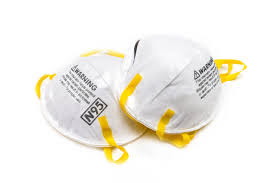
With the new Covid-19 variant surging, doctors advise doubling up or trying N95 masks (WSJ)


Doctors and healthcare systems say it might be time to change your face masks. With infections surging due to the fast-spreading Omicron variant, including among the vaccinated, physicians are now urging people to ditch cloth face masks, which they say may not provide enough protection against the virus. Instead, they recommend pairing cloth masks with surgical models or moving on to stronger respirator masks.

The Mayo Clinic began on Thursday requiring all patients and visitors to wear surgical masks or N95 or KN95 masks. Anyone wearing a single-layer, homemade cloth mask, gaiter or bandanna, or a mask with a vent, will be provided a medical-grade mask to wear over it.

Single-layer cloth masks, which many people prefer for comfort and style, can block larger droplets carrying the virus, but aren’t as effective in blocking smaller aerosols or particles carrying the virus, according to infectious-disease specialists.

The Centers for Disease Control and Prevention’s most recent guidance recommends that people wear masks, including cloth ones that are multilayered and tightly woven, that fit snugly and have an adjustable wire nose bridge. It also suggests layering masks, using a disposable mask underneath a cloth mask and reserving N95 masks for healthcare workers.

But many professionals in the field say certain masks are more effective than others in protecting people from the Omicron variant and that cloth masks alone aren’t. “If you really want no exposure, you have to wear the right type of mask,” says Monica Gandhi, an infectious disease specialist at the University of California, San Francisco. Dr. Gandhi recommends N95 masks, which are certified in the U.S., or the KN95, KF94 and FFP2 masks, which are certified in China, South Korea and Europe respectively.

If those aren’t available, she recommends double masking—a multilayered cloth mask tightly on top of a surgical mask. Surgical masks are made of polypropylene, which has electrostatic charge characteristics that block the virus. “If everyone is just wearing a cloth mask or just a surgical mask, it won’t make any difference” with this highly-transmissible variant, she says. Others in the field say high-quality surgical masks, worn properly, offer protection, but they would also like more data and research on how they stand up against Omicron.

N95 masks, which are certified by the U.S. National Institute of Occupational Safety and Health, have a denser network of fibers than surgical or cloth masks. That tighter mesh, together with an electrostatic charge in the material, generally makes such masks the most efficient at trapping larger droplets and aerosols that are exhaled by the wearer. They also better block such particles from being inhaled.

Properly fitted, certified N95 masks can filter up to 95% of particles in the air. “Any mask is better than no mask. But cloth masks and then surgical masks are not as good as N95-caliber masks,” says Ranu Dhillon, a physician at Brigham and Women’s Hospital.

Megan Srinivas, a clinician and infectious disease specialist at the University of North Carolina at Chapel Hill, says she and other family members wear KN95 masks, which have five layers of overlapping material and a tighter fit to reduce droplets from escaping or entering. She would recommend those same masks, which come in children’s sizes, to parents getting ready to send their children to school in the new year. If those aren’t available, she suggests disposable authorized surgical masks. “We need to educate the public and say that different quality masks offer different protection,” she says.

Graham Snyder, medical director of infection prevention and hospital epidemiology at the University of Pittsburgh Medical Center , says any quality mask that offers an effective seal and is worn correctly—covering the nose and mouth—offers protection. Dr. Synder says he would like data from the CDC on how Omicron spreads and whether the transmission is related to the types of masks. He is concerned about the number of people in the community who don’t wear masks of any type. “Masking works. Period,” he says.

Write to Clare Ansberry at clare.ansberry@wsj.com and Nidhi Subbaraman at Nidhi.Subbaraman@wsj.com